


Carpet Transition Strip
Foshan Golden Honor Building Materials Co., Ltd.: Your Trustworthy Carpet Transition Strip Supplier!
Foshan Golden Honor Building Materials Co., Ltd. was established in 2007 and is located in Nanhai District, Foshan City, China. We mainly produce tile trim, floor transition strips, aluminum handles, cabinet frames, tile leveling systems, etc. In 2019, to expand the production of projects and provide anti-dumping duty solutions to clients, we started to cooperate with a Vietnamese local brand factory to establish a 140,000m² production base in Vietnam, integrating R&D, production, sales, and other service systems.
Our Advantages
Rich Products
Our company has various extruded aluminum profiles, die-cast and aluminum alloy products, and injection molding products, such as aluminum tile trim, floor transition strips, cabinet strips, stainless steel tile trims, PVC tile trims, tile leveling systems, etc.
Strong Production Capability
We have a 20,000 m² workshop, 3 aluminum extrusion production lines, and an independent stainless steel, PVC tile trims production department in China. We have factories in China and Vietnam. Our factory buildings exceed 160,000 square meters and have 15 aluminum product production lines, such as extrusion, oxidation, spraying, thermal transfer, etc., using advanced production machines, mechanized production can better control quality and quantity. It has independent production departments and equipment with specialized stainless steel and PVC tile trims.
Wide Range of Applications
Our products, such as aluminum tile trim, floor transition strips, cabinet strips, stainless steel tile trims, PVC tile trims, tile leveling systems, are widely used in interior decoration projects and the construction of commercial buildings and Residential buildings.
Quality Guaranteed
To ensure that customers have complete confidence in our products, we have implemented special quality inspection procedures to control quality starting from raw materials and conducting random inspections on each production process. We go the extra mile to continually update and maintain our ISO, SGS, and other certifications.
-
![Aluminum Floor Carpet Trim]() Aluminum Floor Carpet TrimNowadays, many areas will be carpeted, so the transition between different types of flooring is necessary. A seamless transition between carpet and tile surfaces calls for aluminum floor carpet...read more
Aluminum Floor Carpet TrimNowadays, many areas will be carpeted, so the transition between different types of flooring is necessary. A seamless transition between carpet and tile surfaces calls for aluminum floor carpet...read more -
![Aluminum Carpet Edge Trim]() Aluminum Carpet Edge TrimAluminum carpet threshold strips are now found everywhere, such as in homes, offices, hotels, auditoriums, etc. If you have a carpeted area with both carpet and hardwood or tile flooring, you'll...read more
Aluminum Carpet Edge TrimAluminum carpet threshold strips are now found everywhere, such as in homes, offices, hotels, auditoriums, etc. If you have a carpeted area with both carpet and hardwood or tile flooring, you'll...read more -
![Aluminium Carpet Edge Strip]() Aluminium Carpet Edge StripAluminum carpet edging strips are becoming more and more popular as they provide a stylish and practical solution for decorating carpet edges. Made from high-quality aluminum, these carpet...read more
Aluminium Carpet Edge StripAluminum carpet edging strips are becoming more and more popular as they provide a stylish and practical solution for decorating carpet edges. Made from high-quality aluminum, these carpet...read more -
![Z Strip Carpet Transition]() Z Strip Carpet TransitionThis Z strip carpet transition is one of the commonly used carpet buckle strip styles. It is made of aluminum alloy, sturdy and durable. It is a very practical ground fixing material. It also has...read more
Z Strip Carpet TransitionThis Z strip carpet transition is one of the commonly used carpet buckle strip styles. It is made of aluminum alloy, sturdy and durable. It is a very practical ground fixing material. It also has...read more -
![Carpet Aluminum Edge Trim]() Carpet Aluminum Edge TrimCarpet aluminum edge trim are a kind of decorative material used when installing carpets. They can connect and fix two carpets, protect the edges of carpets, prevent them from turning up or being...read more
Carpet Aluminum Edge TrimCarpet aluminum edge trim are a kind of decorative material used when installing carpets. They can connect and fix two carpets, protect the edges of carpets, prevent them from turning up or being...read more -
![Aluminum Carpet Transition Strip]() Aluminum Carpet Transition StripThe purpose of aluminum profile carpet trim is to meet the smooth connection and transition between carpets of different thicknesses. Because when laying carpets in large areas indoors, it is...read more
Aluminum Carpet Transition StripThe purpose of aluminum profile carpet trim is to meet the smooth connection and transition between carpets of different thicknesses. Because when laying carpets in large areas indoors, it is...read more -
![Aluminium Carpet Threshold Strip]()


What is Carpet Transition Strip?
Carpet Transition Strip accommodate the transition from one type of flooring to another. You'll find them between rooms, for example where hardwood in a dining room transitions to tile in a kitchen. Carpet Transition Strips serve two main purposes in a residential or commercial space. First, they’re put in place to make navigating from room to room easier. They also provide a visual break between rooms and flooring materials that might otherwise be jarring and less than attractive. When it comes to safety, Carpet Transition Strips delineate the change between flooring materials, giving you a visual clue about what’s under your feet.
Premium Quality
Carpet Transition Strip is made of heavy-duty thick rubber material and is exceptionally durable; it resists curling, tearing, wrinkling, or lifting even under the strain of heavy foot traffic. This rubber transition strip is designed to easily cover the edges of floor tiles and carpet. It is highly flexible and manufactured to grip on different materials.
Strong Self Adhesive
The Carpet Transition Strip has a strong self-adhesive that enables it to adhere to any flat surface without difficulty. You can stick this stair edge protector to any smooth surface because of its strong self-adhesion.
Used For Indoors And Outdoors
Carpet Transition Strip is appropriate for a variety of applications and can be used both indoors and outdoors because it is water and abrasion-resistant. Install to lessen trip risks on stairs, steps, edges, and other surfaces.
Wide Application
Carpet Transition Strip is available in various edges which thicknesses is less than 5mm, and usually used in different places like homes, hotels, restaurants, conference halls, convention centers and other special occasions to trim and decorate the edges of carpets and floors.
Easy to Use
The Carpet Transition Strip is quick and simple to be installed. Firstly, measure the required length in advance and then freely cut to your custom length. Secondly, tear off the red backing tape and place it to a suitable position. Finally, stick firmly on the floor and embed the carpet in the side of notch.
East To Apply And Remove
Carpet Transition Strip is very easy to apply and remove. You Just clean the surface with a wet cloth and let it dry to ensure the best adhesion. Then apply Carpet Transition Strip by pressing it down firmly. It doesn't leave any residue behind when you remove it.
Applications of Carpet Transition Strip

Suitable For Transition Between Carpets
Carpet Transition Strips are suitable for transition between carpets. They can protect the edges of the carpet joints. They can also be used at thresholds and single-sided joints between floors and carpets to protect the edges.
Used For Transition Between Carpets And Other Materials
Carpet Transition Strips are used for transition between carpets and other materials. The aluminum alloy base is equipped with protruding serrations to tightly buckle the bottom of the carpet to prevent it from falling off. Steel nails are used for construction.
Suitable For Connection And Transition Between PVC Floors And Floors Of Various Materials
Carpet Transition Strips are suitable for connection and transition between PVC floors and floors of various materials, such as sports profile floors, laminate floors, carpets, etc. If equipped with an aluminum alloy base, the appearance is more luxurious and beautiful, and the effect is more solid.
How To Install Carpet Transition Strip
Step 1: Measure The Area, Including Measuring The Length Of The Area With a Tape Measure
Use a tape measure to measure the length of the area where you plan to install the transition strip. If it's in a doorway, measure the distance between the two doorjambs. If you are connecting two rooms without a doorway, then you will measure the entire length of the seam between the two floors, extending from wall to wall.
Step 2: Cut The Metal Rail, Including Using a Hacksaw To Cut The Marked Measurement
Your transition strip might be a standalone metal rail, or it might have a vinyl or hardwood covering that is attached using a metal rail beneath it. Either way, you should cut the metal rail to fit your measurements from step one. Use a marker to mark off the precise measurements on the rail, then use a hacksaw to cut the rail to size.
Step 3: Mark And Drill Holes, Optional Step Including Drilling Pilot Holes
If you are screwing down the rail, lay the rail over the seam and mark where the rail's holes line up on the floor. Next, using a masonry drill bit, drill pilot holes through the marks you just made. Finish by inserting the anchors into the holes.
Step 4: Glue Or Screw Rail To Concrete Subfloor, Including Applying Glue To The Back Of The Rail
When learning how to install flooring transition strips on concrete, decide whether you are gluing or screwing the rail to the concrete subfloor. Screws are the best option in high-traffic areas, while glue provides a more streamlined appearance. Use your premarked holes if screwing the rail to the floor, or apply glue to the back of the rail and lay it over the seam, applying pressure for at least 30 seconds to secure it in place.
Step 5: Cut And Install Carpet Transition Strip, Including Using a Hacksaw To Cut The Covering
You can skip this step if you have a standalone metal Carpet Transition Strip without a vinyl or hardwood covering. But if you have a cover for it, use a hacksaw to cut it to the right length; this will be the same length you measured during step one. Then lay the cover on top of your metal rail and snap it into place. Clear any debris before installing Carpet Transition Strips on concrete, as this could cause wear and decrease the Carpet Transition Strip’s durability. Also, pay close attention to the aesthetic of the strip to ensure it fits with the rest of the home. Finally, check the strip’s integrity periodically to ensure it has not come loose, posing a tripping hazard.
How To Remove Adhesive Tape Residue Beside Carpet Transition Strip
Test First
Please test your residue remover in an unnoticeable area first to make sure there will be no damage to the surface. This is especially true for wood, painted surfaces and any high gloss finished surface as the agents in some removers can dull the surface and or discolor them.
Make It Quick
Think of tape like a band-aid. Removing it slowly allows flow and separation, creating more stickiness, while ripping it off in one motion makes for a clean, less painful removal. This is not necessarily true for all surfaces; this is an ideal technique for tape that has been on for a few days while the tape is still tacky, but if the tape has dried out take a little more time to take it off not to damage the surfaces as the surface may also be affected if the tape has been on too long especially painted walls.
Scrape It
To remove small amounts of construction adhesives from your paneling, molding, and floor, use a putty knife to scrape the adhesive off. Just be careful not to drive the edge of the knife too hard on the surface to avoid causing damage. (For stone or mirrored scratch-resistant surfaces, consider using a straight blade to scrape residue away.)
Try Warm, Soapy Water
For surfaces such as acrylic, plaster, asphalt, copper, enamel, glass, linoleum, marble, pewter, plexiglass, and all things vinyl, all you need is warm, sudsy water. The warm water will soften the tape so it can be removed with a sponge or cloth.
Apply Heat
Much like warm water softens tape, heat can help melt stubborn adhesives without damaging the surface of your floor or wall. Just one minute with a hairdryer, heat gun or even a blow torch will do the trick. Gently scrape off the adhesive while you apply heat on the surface of your floor or wall. Once the surface is cold, the construction adhesive tends to harden, so it becomes difficult for you to remove it without damaging your floor or wall.
Apply Pressure
Stubborn construction adhesives on rocks, bricks, concrete, and other hard materials can be removed by blasting the surface with high-powered water pressure system or through sandblasting. Water pressure and sandblasting work well, but they can also leave some marks on the surface of the rock, bricks, and other hard materials, so keep that in mind.
Brush It Off
Do not use soap on stone surfaces such as bluestone, brick, concrete, granite, limestone, terrazzo, and masonry tile. It will leave a hard-to-removes scum. Instead, mix together a solution of laundry detergent or baking soda with a little water to form a paste. With a soft brush (a toothbrush is good for small areas) gently spread the solution over the gummy portion until it is removed, and then rinse with clear warm water.
Use Alcohol
Consider using a little rubbing alcohol, which is a non-solvent for pressure-sensitive adhesives. When you apply rubbing alcohol, the adhesive residue will lose its adhesion and will precipitate. This can also work with acetone, or nail polish remover. Keep in mind that alcohol or acetone may damage painted surfaces, so be careful when using these substances.
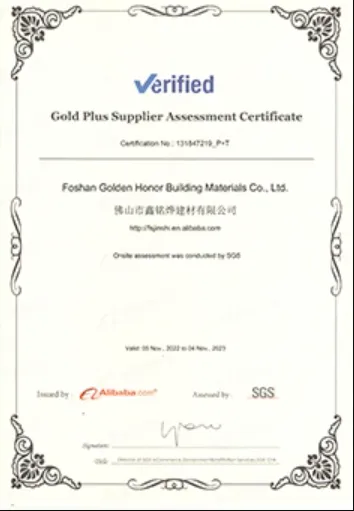
Certificate




Frequently Asked Questions
We're professional carpet transition strip manufacturers and suppliers in China, specialized in providing high quality customized service. We warmly welcome you to wholesale high-grade carpet transition strip made in China here from our factory.
strip for carpet edge, Aluminum Floor Carpet Trim, trim between carpet and tile