


Tile Grout
Foshan Golden Honor Building Materials Co., Ltd.: Your Trustworthy Tile Grout Supplier!
Foshan Golden Honor Building Materials Co., Ltd. was established in 2007 and is located in Nanhai District, Foshan City, China. We mainly produce tile trim, floor transition strips, aluminum handles, cabinet frames, tile leveling systems, etc. In 2019, to expand the production of projects and provide anti-dumping duty solutions to clients, we started to cooperate with a Vietnamese local brand factory to establish a 140,000m² production base in Vietnam, integrating R&D, production, sales, and other service systems.
Our Advantages
Rich Products
Our company has various extruded aluminum profiles, die-cast and aluminum alloy products, and injection molding products, such as aluminum tile trim, floor transition strips, cabinet strips, stainless steel tile trims, PVC tile trims, tile leveling systems, etc.
Strong Production Capability
We have a 20,000 m² workshop, 3 aluminum extrusion production lines, and an independent stainless steel, PVC tile trims production department in China. We have factories in China and Vietnam. Our factory buildings exceed 160,000 square meters and have 15 aluminum product production lines, such as extrusion, oxidation, spraying, thermal transfer, etc., using advanced production machines, mechanized production can better control quality and quantity. It has independent production departments and equipment with specialized stainless steel and PVC tile trims.
Wide Range of Applications
Our products, such as aluminum tile trim, floor transition strips, cabinet strips, stainless steel tile trims, PVC tile trims, tile leveling systems, are widely used in interior decoration projects and the construction of commercial buildings and Residential buildings.
Quality Guaranteed
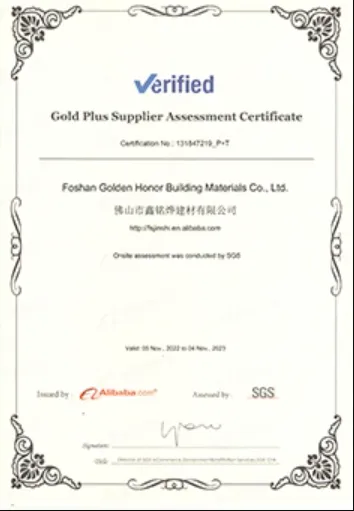
To ensure that customers have complete confidence in our products, we have implemented special quality inspection procedures to control quality starting from raw materials and conducting random inspections on each production process. We go the extra mile to continually update and maintain our ISO, SGS, and other certifications.
-
![2 Part Epoxy Tile Grout]() 2 Part Epoxy Tile GroutThe 2 Part Epoxy Tile Grout is an upgraded product of tile grout. It adopts new materials and new technology, breaks through the limitations of traditional tile grout, has better anti-seepage,...read more
2 Part Epoxy Tile GroutThe 2 Part Epoxy Tile Grout is an upgraded product of tile grout. It adopts new materials and new technology, breaks through the limitations of traditional tile grout, has better anti-seepage,...read more -
![Epoxy Grout Tube]() Epoxy Grout TubeBeautifying seams has now become a necessary part of decoration, and this epoxy grout tube has the same beautifying effect as tiles. It adopts a double-tube beautifying design, which is composed...read more
Epoxy Grout TubeBeautifying seams has now become a necessary part of decoration, and this epoxy grout tube has the same beautifying effect as tiles. It adopts a double-tube beautifying design, which is composed...read more -
![Tile Joint Sealant Adhesive]() Tile Joint Sealant AdhesiveWhy do we recommend two-component epoxy tile joint sealant adhesive ? Although water-based single-component epoxy tile joint sealant adhesive is water-resistant, stain-resistant, mildew-resistant,...read more
Tile Joint Sealant AdhesiveWhy do we recommend two-component epoxy tile joint sealant adhesive ? Although water-based single-component epoxy tile joint sealant adhesive is water-resistant, stain-resistant, mildew-resistant,...read more -
![Premixed Epoxy Grout Tube]() Premixed Epoxy Grout TubeThis is a reactive two-component premixed epoxy grout tube. On the basis of epoxy resin and pigment, a certain curing agent is added, and the epoxy resin and curing agent are respectively...read more
Premixed Epoxy Grout TubeThis is a reactive two-component premixed epoxy grout tube. On the basis of epoxy resin and pigment, a certain curing agent is added, and the epoxy resin and curing agent are respectively...read more -
![Epoxy Ceramic Tile Grout]() Epoxy Ceramic Tile GroutEpoxy ceramic tile grout is based on epoxy resin and pigment, with a certain amount of epoxy curing agent added. The epoxy resin and epoxy curing agent are respectively installed in two tubes....read more
Epoxy Ceramic Tile GroutEpoxy ceramic tile grout is based on epoxy resin and pigment, with a certain amount of epoxy curing agent added. The epoxy resin and epoxy curing agent are respectively installed in two tubes....read more -
![Epoxy Grout For Marble Tile]() Epoxy Grout For Marble TileThis two-component epoxy grout for marble tile is a special caulking material, usually made of epoxy resin curing agent and other ingredients. It can fill the tiny pores and gaps on the surface of...read more
Epoxy Grout For Marble TileThis two-component epoxy grout for marble tile is a special caulking material, usually made of epoxy resin curing agent and other ingredients. It can fill the tiny pores and gaps on the surface of...read more


What is Tile Grout?
Tile Grout is filler for the joints between tiles once the tile has been set on a wall, floor, or other surfaces. It's typically a powdered mix of cement, limestone, and color pigment (sometimes with sand added). Once mixed with water, the mixture is applied to the tile and left to harden.
Benefits of Tile Grout
Helps To Strengthen And Protect Your Tiled Surface
Tile Grout helps to strengthen and protect your tiled surface. By filling in the gaps between tiles, you’ll create a solid barrier that can help prevent dirt, grime, and moisture from seeping in and damaging your tiles. This can be especially important in high-traffic areas like bathrooms and kitchens, where spills and splashes are commonplace.
Give Your Tiles a More Finished And Polished Look
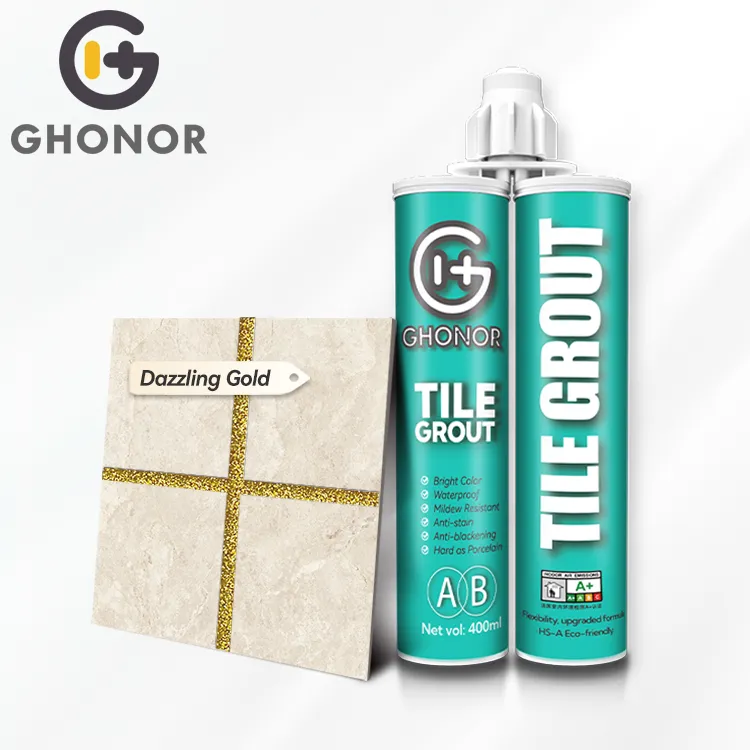
Tile Grout can also give your tiles a more finished and polished look. Without grout, the edges of your tiles can appear rough and uneven, but with grout, the gaps are seamlessly filled in to create a smooth, uniform surface. Additionally, grout comes in a wide range of colors, so you can choose a shade that complements your tile and enhances its overall aesthetic.

Make Your Tiled Surface Easier To Clean And Maintain
Another benefit of Tile Grout is that it can make your tiled surface easier to clean and maintain. When dirt and debris accumulate in the gaps between tiles, they can be difficult to remove with standard cleaning methods. However, with Tile Grout, the surface is more even, making it easier to sweep, mop, or wipe down with a cloth. And since grout is a sealant, it helps repel stains, making it less likely that your tiles will discolor over time.
Help Preserve The Structural Integrity Of Your Tiled Surface
Finally, Tile Grout can help preserve the structural integrity of your tiled surface. Over time, tiles can shift and move, creating small gaps that can lead to larger cracks and chips. Grout helps hold the tiles in place and prevent this from happening, ensuring that your tiled surface will last for years to come.
How to Use Tile Grout
Preparation
Prepare your joints by smoothing out excess adhesives. Do not chip the tiles but smooth out grooves between the tiles. Remove larger particles and vacuum between the tiles to remove any particles and debris.
Mix
Pour your chosen grout into a mixing bucket. You’ll likely need to pour water in whilst mixing with your trowel. Try moving the bucket slightly in a twisting motion, almost like a cement mixer.Once all the water is absorbed into the, you’ll notice the consistency change to an even sludge. Make sure you get dry grout from the bottom of the bucket into the mix.Once you’ve properly mixed your grout, leave it to stand for 5-10 minutes–allowing the mix to pre-harden very slightly, easing the process of application.
Prep Trowel And Begin Application
You’ll now want to load your trowel. Try and scrape your trowel around the bucket or barrel, keep the motion even and try to prevent grout from falling onto the floor. Now, it’s time to apply the grout. Apply generously and evenly. Try initially to load your wall with a generous layer of grout, enough to adequately fill the joints. Spread diagonally and forcefully to push grout deeper into the joints. Work on smaller areas of around 2ft x 2ft before spreading more grout across the whole area as the joints begin to fill. Knowing when to stop can be tricky and it’s best to keep going until you can see that each groove is filled evenly and to the top.
Remove Excess Grout
Use a squeegee or similar rough but dry sponge to remove the bulk of excess grout. The idea isn’t to scrub the wall clean yet, but simply to remove enough grout that you can see your tiles and assess the gaps between them properly. Keep the tool you use for this nice and dry – you don’t want to add any moisture into the mix at all at this stage.
Begin To Sponge The Surface
Now it’s time to step up the clean-up operation by using a moist sponge. Moist is the keyword here–make sure your sponge is NOT wet and especially not dripping. Sponge away until you’re clearly revealing the surface of your tiles. At this stage, a nice and even finish should emerge. Diagonal movements are best here. You want to avoid pushing against the vertical and horizontal angles of the grout between the tiles.
Fine-Clean The Lines
‘Tooling’ is the process of finishing your grout lines to a smooth and even finish. Use a fairly dry sponge, just enough water to maintain lubrication, and push directly along the edges with your index finger. You want to avoid pushing the grout out – you’re just trying to level it between the tiles. At this stage, your tile surfaces should be devoid of any real grout and will instead be covered with little more than a ‘haze’.
De-Haze
Leave the Tile Grout for at least one hour or until it is fairly firm, otherwise you’ll wash the dust into the Tile Grout. It will harden up considerably and you can begin de-hazing the tiles with a microfibre towel. If a residue is difficult to remove, especially on coarse finish tiles then it may be best to use a Tile Grout stain remover. Keep it fairly dry to avoid rubbing new moisture into the grooves as this will lengthen curing times. Work the haze off the tiles and it’ll be obvious when the haze clears and hopefully, you’ll reveal a freshly grouted wall or floor with evenly filled grooves.
Let It Dry
Different Tile Grouts will take longer to fully harden so pay attention to this, reading the instructions on your chosen product, and keep the area completely dry during the process. Once dry, you can now enjoy your freshly grouted wall or floor long into the future. In wet areas like showers, bathrooms and kitchen splash backs, try using the Tile Grout and tile protector spray, this creates a protective surface on the tiles to reduce limescale and grime buildup.
Recipe 1: Hydrogen Peroxide and Baking Soda
Sprinkle your Tile Grout with baking soda, then spray the powder with hydrogen peroxide. The combination will bubble. Allow the mixture to sit on the Tile Grout for several minutes. Scrub, then wipe away with a damp rag. As an alternative, mix baking soda and hydrogen peroxide into a thick paste and then apply the paste to the Tile Grout. Allow the mixture to sit and then scrub the Tile Grout with a gentle scrub brush or old toothbrush. Rinse and wipe away.
Recipe 2: Hydrogen Peroxide, Baking Soda and Dish Soap
Mix the hydrogen peroxide and baking soda together into a thin paste. Add dish soap and spoon the mixture onto the Tile Grout. Allow the combination to sit on the Tile Grout for several minutes, then scrub the mixture with a soft brush. Rinse clean.
Clean Early and Often
Tile Grout gets dirty over time, not all at once. You can keep your Tile Grout looking its best by cleaning it early, as soon as you see a spill or stain, and often with an effective solution that works for you. Waiting until it can't be further ignored can lead to a more permanent discoloration of the Tile Grout, and can also lead to a lot of back-breaking labor for you.

How to Maintain Tile Grout
Routine Cleaning
Regular cleaning is vital to maintain the appearance and integrity of tile grout. Sweep or vacuum tiled areas frequently to remove dirt and debris that can scratch or dull the Tile Grout surface. For floor tiles, a gentle mopping with warm water can help keep the Tile Grout clean. Make sure to change the mop water when it gets dirty to avoid re-depositing grime onto the Tile Grout lines.
Deep Cleaning
Over time, your Tile Grout may become stained or discoloured, necessitating a deeper cleaning. For these instances, a pH-neutral cleaner specifically designed for tiles and Tile Grout is recommended. You can also create a homemade cleaning solution by mixing baking soda with water to form a paste. Apply this paste onto the grout lines, leave it for a few minutes, and then gently scrub with a soft brush or toothbrush. Rinse the area thoroughly with clean water to remove any residue.
Using Cleaning Agents
When choosing cleaning products, opt for those that are safe for Tile Grout to avoid causing any damage. Harsh chemicals like bleach or ammonia can erode Tile Grout over time, leading to weakening and potential damage. Always follow the instructions on cleaning products and test them on a small, inconspicuous area first.
Preventing and Treating Mould and Mildew
Moisture and dampness are the primary culprits behind mould and mildew growth in your Tile Grout. To prevent this, ensure good air circulation in moisture-prone areas like bathrooms and kitchens. Use exhaust fans, open any windows in the room, and consider using a dehumidifier in highly humid conditions. Regular cleaning is crucial in preventing mould growth. For existing mould, use a mildewcide or a solution of vinegar and water to clean the affected areas. It’s important to address mould issues promptly to prevent it from spreading.
Tile Grout Sealing & Protection
Sealing Tile Grout is an effective way to extend its life and maintain its appearance. Tile Grout sealers come in two main types: penetrating and non-penetrating (surface) sealers. Penetrating sealers absorb into the Tile Grout, providing protection from within, while non-penetrating sealers form a protective barrier on the surface. Sealing is especially recommended for areas exposed to high moisture levels, such as showers and backsplashes. Reapply the sealer periodically to maintain its protective properties.
Repairing & Replacing Tile Grout
Keep an eye out for any signs of Tile Grout damage, such as cracking, crumbling, or discolouration. These issues can lead to more significant problems like water infiltration and tile damage. For minor cracks, a simple reapplication of Tile Grout might suffice. For more severe damage, it may be necessary to remove the old Tile Grout and reapply new Tile Grout. This process involves carefully scraping out the damaged Tile Grout and applying new Tile Grout, ensuring a proper bond and seal.
How to Choose Tile Grout
Purpose Of Tile Grout
The purposes of Tile Grout could be manifold: enhancing the aesthetics of a space, improving the durability of the tiled surfaces, and also serving hygienic purposes.
Areas Of Application
All types of Tile Grouts can be chosen for internal conditions; however, when selecting Tile Grouts for external conditions, it is important to focus on parameters like temperature resistance, discoloration, durability, long-lasting properties, etc.
Choice Of The Right Colour
The Tile Grout colour can be in contrast or of similar shades, depending upon the vision and design that you have in mind. If you are looking for an embossed or dramatic look, you would go for contrast shades, but if you are inclined towards a more sober and classy look, the preference would be towards matching shades. Whatever the choice, you can find a variety of colour options in epoxy Tile Grouts.
Service Life Expectancy
The life expectancy of Tile Grout plays an important factor depending on where the Tile Grout is being carried out. There are other factors like mechanical properties and chemical resistance. Abrasion resistance is essential when the surface is subjected to movement, especially in areas like swimming pools, podiums, warehouses, commercial complexes, etc.
Certificate




Frequently Asked Questions
We're professional tile grout manufacturers and suppliers in China, specialized in providing high quality customized service. We warmly welcome you to wholesale high-grade tile grout made in China here from our factory.