


Tile Expansion Joint
Foshan Golden Honor Building Materials Co., Ltd.: Your Trustworthy Tile Expansion Joint Supplier!
Foshan Golden Honor Building Materials Co., Ltd. was established in 2007 and is located in Nanhai District, Foshan City, China. We mainly produce tile trim, floor transition strips, aluminum handles, cabinet frames, tile leveling systems, etc. In 2019, to expand the production of projects and provide anti-dumping duty solutions to clients, we started to cooperate with a Vietnamese local brand factory to establish a 140,000m² production base in Vietnam, integrating R&D, production, sales, and other service systems.
Our Advantages
Rich Products
Our company has various extruded aluminum profiles, die-cast and aluminum alloy products, and injection molding products, such as aluminum tile trim, floor transition strips, cabinet strips, stainless steel tile trims, PVC tile trims, tile leveling systems, etc.
Strong Production Capability
We have a 20,000 m² workshop, 3 aluminum extrusion production lines, and an independent stainless steel, PVC tile trims production department in China. We have factories in China and Vietnam. Our factory buildings exceed 160,000 square meters and have 15 aluminum product production lines, such as extrusion, oxidation, spraying, thermal transfer, etc., using advanced production machines, mechanized production can better control quality and quantity. It has independent production departments and equipment with specialized stainless steel and PVC tile trims.
Wide Range of Applications
Our products, such as aluminum tile trim, floor transition strips, cabinet strips, stainless steel tile trims, PVC tile trims, tile leveling systems, are widely used in interior decoration projects and the construction of commercial buildings and Residential buildings.
Quality Guaranteed
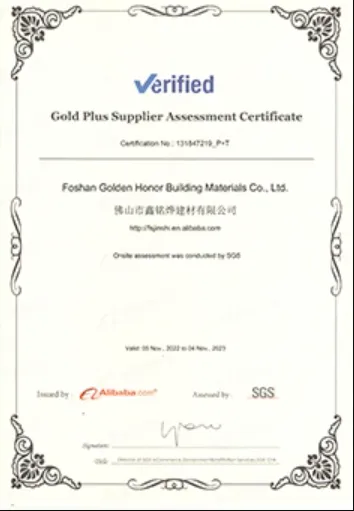
To ensure that customers have complete confidence in our products, we have implemented special quality inspection procedures to control quality starting from raw materials and conducting random inspections on each production process. We go the extra mile to continually update and maintain our ISO, SGS, and other certifications.
-
![Porcelain Tile Expansion Joints]() Porcelain Tile Expansion JointsDue to thermal expansion, cold contraction, floor movement and other reasons, porcelain tile expansion joints can be installed to adapt to the natural expansion and contraction of tiles, prevent...read more
Porcelain Tile Expansion JointsDue to thermal expansion, cold contraction, floor movement and other reasons, porcelain tile expansion joints can be installed to adapt to the natural expansion and contraction of tiles, prevent...read more -
![Aluminium Movement Joint]()
-
![Aluminum Tile Expansion Trim]()
-
![Ceramic Tile Expansion Joint]() Ceramic Tile Expansion JointUsing ceramic tile expansion joint can prevent tiles from cracking or falling off due to thermal expansion and contraction. The surface inserts can be made of PVC, silicone, rubber and other...read more
Ceramic Tile Expansion JointUsing ceramic tile expansion joint can prevent tiles from cracking or falling off due to thermal expansion and contraction. The surface inserts can be made of PVC, silicone, rubber and other...read more -
![Stainless Steel Tile Expansion Strips]() Stainless Steel Tile Expansion StripsDesigned to solve structural deformation of tile surfaces, stainless steel tile expansion strips are high-strength, corrosion-resistant, durable, beautiful, and low-maintenance. They can be used...read more
Stainless Steel Tile Expansion StripsDesigned to solve structural deformation of tile surfaces, stainless steel tile expansion strips are high-strength, corrosion-resistant, durable, beautiful, and low-maintenance. They can be used...read more -
![Stainless Steel Control Joint In Floor Tiles]() Stainless Steel Control Joint In Floor TilesStainless steel control joint in floor tiles are a rugged solution that protects tile edges and controls structural movement in harsh environments. Heavy-duty expansion joints in 304 or 316...read more
Stainless Steel Control Joint In Floor TilesStainless steel control joint in floor tiles are a rugged solution that protects tile edges and controls structural movement in harsh environments. Heavy-duty expansion joints in 304 or 316...read more -
![Aluminum Movement Joint For Tiles]() Aluminum Movement Joint For TilesAluminum Movement Joint For Tiles is durable, corrosion-resistant, and lightweight; it accommodates thermal expansion/contraction, prevents tile cracking, and suits high-moisture areas (e.g.,...read more
Aluminum Movement Joint For TilesAluminum Movement Joint For Tiles is durable, corrosion-resistant, and lightweight; it accommodates thermal expansion/contraction, prevents tile cracking, and suits high-moisture areas (e.g.,...read more -
![Plastic Movement Joint For Tiles]() Plastic Movement Joint For Tiles* Plastic Movement Joint For Tiles in durable PVC with flexible insert.read more
Plastic Movement Joint For Tiles* Plastic Movement Joint For Tiles in durable PVC with flexible insert.read more
* Absorbs movement; prevents tenting and cracked grout.
* Protects edges for a clean finish.
* Perforated... -
![Aluminum Expansion Joint For Concrete]() Aluminum Expansion Joint For ConcreteAluminum expansion joint for concrete can be used to prevent expansion and contraction of floors, bridges, pipes, etc. due to temperature changes, prevent cracking or deformation, and play a role...read more
Aluminum Expansion Joint For ConcreteAluminum expansion joint for concrete can be used to prevent expansion and contraction of floors, bridges, pipes, etc. due to temperature changes, prevent cracking or deformation, and play a role...read more -
![Aluminum Expansion Joint]() Aluminum Expansion JointAluminum Expansion Joints: Precision Engineering for Dynamic Structures In modern construction and industrial applications, controlling thermal expansion, vibration, and structural movement is...read more
Aluminum Expansion JointAluminum Expansion Joints: Precision Engineering for Dynamic Structures In modern construction and industrial applications, controlling thermal expansion, vibration, and structural movement is...read more -
![Tile Control Joint]() Tile Control JointWhen the floor is in use, the tiles will expand or contract due to factors such as changes in temperature and humidity. If there are no tile control joint, it may cause the floor to deform, warp,...read more
Tile Control JointWhen the floor is in use, the tiles will expand or contract due to factors such as changes in temperature and humidity. If there are no tile control joint, it may cause the floor to deform, warp,...read more -
![Movement Joints In Floor Tiles]()


GWhat is Tile Expansion Joint?
Tile Expansion Joint is an auxiliary material used to fill and protect the gaps between tiles. After the gaps between tiles are filled, dust, water and dirt can be prevented from adhering, keeping the floor clean and sanitary. In addition, Tile Expansion Joint can also increase the beauty and overall effect of the Tile Expansion Joints, making the tile paving more beautiful.
Benefits of Tile Expansion Joint
Light Weight & Convenient Surface Treatment
Tile Expansion Joint has low density and its specific gravity is only 1/3 of that of steel, so Tile Expansion Joints are light and easy to carry and install. The surface of Tile Expansion Joints is easy to be oxidized, sprayed, electroplated and other surface treatments, which can make the surface color of Tile Expansion Joints more beautiful.
High Strength
Tile Expansion Joints have high strength, which is more than 50% higher than the same size of steel, so Tile Expansion Joints can withstand greater weight and pressure. Aluminum alloy has a lower density and has higher strength than traditional metal materials such as steel and copper, making it an ideal choice in many fields.
Corrosion Resistance
Tile Expansion Joints have good corrosion resistance and can be used for a long time in harsh environments, such as seaside buildings and humid environments. They have good durability in the atmosphere, seawater and other environments.
Good Thermal And Electrical Conductivity
Tile Expansion Joint has excellent thermal conductivity and can quickly transfer heat, so it has advantages in applications that require heat dissipation, such as radiators. Tile Expansion Joint has high electrical conductivity and is widely used in electrical wires and electronic devices.
Cutting
Cut the aluminum profile into strips of various sizes as required.
Stamping According To The Drawing
According to the prepared drawing, punch the aluminum strip to make it reach the required shape. This is the first step in making the Tile Expansion Joint.
Cleaning
Clean the finished product from the punching machine to remove the dirt and oxide on the surface.
Welding
Use TIG welding equipment to weld the Tile Expansion Joint. Before that, you need to use the mold to align the required grooves.
Electric Cutting
Cut the large piece of aluminum into small pieces of Tile Expansion Joints. At the same time, during the electric cutting, the Tile Expansion Joints will also be pressed, punched and hit to ensure the quality of the Tile Expansion Joints after forming.
Burr Cleaning
During the process of making the Tile Expansion Joints, burrs are prone to appear on the edges. In order to avoid affecting the subsequent process, they need to be cleaned.
Surface Treatment
The last step is to perform surface treatment on the Tile Expansion Joints. The treatment process here usually includes oil spraying, electrophoresis and anodizing, so that the surface of the Tile Expansion Joints can achieve the effect of corrosion resistance, wear resistance and beauty.
How To Install Tile Expansion Joint
Preparation
Before installing the Tile Expansion Joint, the following preparations need to be done. Clean the Tile Expansion Joints to ensure that the joints are clean and free of impurities. Clean the tile surface to ensure that the surface is clean and free of impurities. Measure the width of the Tile Expansion Joints and select the appropriate Tile Expansion Joint according to the width.
Fix With Expansion Screws
1. Draw the position of the Tile Expansion Joint on the selected wall, and then use an electric drill to pre-drill the hole into the wall. 2. Insert the expansion screw into the hole, then put the Tile Expansion Joint into the corresponding position, tighten the screw, and use the expansion force to stick it close to the wall. 3. Use a level ruler or other auxiliary tools to check whether the Tile Expansion Joint is level. If it is found to be uneven, adjust it in time to ensure its levelness.
Fix With Fixing Glue
1. Apply a uniform layer of fixing glue on the selected wall position and apply it flat on the wall. 2. Put the Tile Expansion Joint into the fixing glue and place it in the expected position. Then use a clamp or a paddle to fix the Tile Expansion Joint to prevent it from shifting during the drying process of the fixing glue. 3. Check whether the Tile Expansion Joint is level. If it is found to be uneven, adjust it in time to ensure its levelness. Adjustment can be made when it is not dry.
How To Maintain Tile Expansion Joint
Preparation Before Maintenance
Before performing maintenance on Tile Expansion Joints, it is necessary to inspect the Tile Expansion Joint to ensure that it has no obvious damage and rust. If the surface of the Tile Expansion Joint is found to be damaged or rusted, it should be repaired and rust-proofed first to avoid affecting subsequent maintenance work.
Cleaning Tile Expansion Joints
The cleaning of Tile Expansion Joints should be regular. You can wipe the surface with a soft cloth or satin dipped in water, or you can use a special detergent. When using detergents, be careful not to use highly corrosive chemicals to avoid damaging the surface of the Tile Expansion Joint. When cleaning, you can use some soft brushes appropriately to treat some difficult-to-clean parts.


Rust-Proof Treatment
Tile Expansion Joints are easily oxidized, so rust-proofing is required in the treatment of the Tile Expansion Joint surface. You can use a special rust-proof agent for treatment. Before applying the rust-proof agent, you should first clean the surface with a detergent and then wipe it clean. When applying the rust-proof agent, you should apply it according to the instructions for use, and you cannot apply it at will to avoid affecting the rust-proof effect. You should also pay attention to avoid Tile Expansion Joints from contacting humid environments to avoid accelerated oxidation.
Moisturizing Treatment
A dry environment will accelerate the corrosion of Tile Expansion Joint, so it needs to be moisturized. A humidifier can be installed in the indoor environment to maintain appropriate humidity. In addition, you can also use maintenance oil or silicone wax for maintenance frequently. Cleaning with clean water can keep the surface moist.
Certificate




Recommend Design

Aluminum Expansion Joint

Aluminum Expansion Joint For Concrete

Aluminum Tile Expansion Joint Trim

Aluminum Floor Tile Expansion Strips

Aluminum Movement Joint For Tiles

Stainless Steel Tile Expansion Strips

Stainless Steel Control Joint In Floor Tiles

Plastic Movement Joint For Tiles
Frequently Asked Questions
We're professional tile expansion joint manufacturers and suppliers in China, specialized in providing high quality customized service. We warmly welcome you to wholesale high-grade tile expansion joint made in China here from our factory.
tile expansion trim, Floor Tile Expansion Strips, gold tile expansion joint