


Stainless Stair Nosing
Foshan Golden Honor Building Materials Co., Ltd.: Your Trustworthy Stainless Stair Nosing Supplier!
Foshan Golden Honor Building Materials Co., Ltd. was established in 2007 and is located in Nanhai District, Foshan City, China. We mainly produce tile trim, floor transition strips, aluminum handles, cabinet frames, tile leveling systems, etc. In 2019, to expand the production of projects and provide anti-dumping duty solutions to clients, we started to cooperate with a Vietnamese local brand factory to establish a 140,000m² production base in Vietnam, integrating R&D, production, sales, and other service systems.
Our Advantages
Rich Products
Our company has various extruded aluminum profiles, die-cast and aluminum alloy products, and injection molding products, such as aluminum tile trim, floor transition strips, cabinet strips, stainless steel tile trims, PVC tile trims, tile leveling systems, etc.
Strong Production Capability
We have a 20,000 m² workshop, 3 aluminum extrusion production lines, and an independent stainless steel, PVC tile trims production department in China. We have factories in China and Vietnam. Our factory buildings exceed 160,000 square meters and have 15 aluminum product production lines, such as extrusion, oxidation, spraying, thermal transfer, etc., using advanced production machines, mechanized production can better control quality and quantity. It has independent production departments and equipment with specialized stainless steel and PVC tile trims.
Wide Range of Applications
Our products, such as aluminum tile trim, floor transition strips, cabinet strips, stainless steel tile trims, PVC tile trims, tile leveling systems, are widely used in interior decoration projects and the construction of commercial buildings and Residential buildings.
Quality Guaranteed
To ensure that customers have complete confidence in our products, we have implemented special quality inspection procedures to control quality starting from raw materials and conducting random inspections on each production process. We go the extra mile to continually update and maintain our ISO, SGS, and other certifications.
-
![Standard Stair Nosing In Stainless Steel]() Standard Stair Nosing In Stainless SteelIf the stairs are not anti-slip, there may be safety hazards, especially on rainy days or in humid areas. This is why it is necessary to install stair anti-slip strips, which not only enhance...read more
Standard Stair Nosing In Stainless SteelIf the stairs are not anti-slip, there may be safety hazards, especially on rainy days or in humid areas. This is why it is necessary to install stair anti-slip strips, which not only enhance...read more -
![Stainless Steel Anti Slip Stair Nosing]() Stainless Steel Anti Slip Stair NosingOur stainless steel non-slip stair nosing is the perfect solution for outdoor use. This stair anti-slip strip is made of high-quality 304 stainless steel, which has the advantages of...read more
Stainless Steel Anti Slip Stair NosingOur stainless steel non-slip stair nosing is the perfect solution for outdoor use. This stair anti-slip strip is made of high-quality 304 stainless steel, which has the advantages of...read more -
![Stainless Steel Stair Nosing Profiles]()
-
![Stainless Steel Nosing Strips For Stairs]() Stainless Steel Nosing Strips For StairsBoost your inventory with high-margin Stainless Steel Nosing Strips For Stairs. Superior durability, long-term ROI, and perfect for commercial projects. Get a custom quote now!read more
Stainless Steel Nosing Strips For StairsBoost your inventory with high-margin Stainless Steel Nosing Strips For Stairs. Superior durability, long-term ROI, and perfect for commercial projects. Get a custom quote now!read more -
![Stainless Steel Stair Nosing]() Stainless Steel Stair NosingGhonor is a leading manufacturer of stainless steel anti-slip strips with factories in China and Vietnam. With more than 16 years of experience in production technology, we provide customers with...read more
Stainless Steel Stair NosingGhonor is a leading manufacturer of stainless steel anti-slip strips with factories in China and Vietnam. With more than 16 years of experience in production technology, we provide customers with...read more -
![Brushed Stainless Steel Stair Nosing]()
-
![Stainless Steel Nosing To Stairs]()


What is Stainless Stair Nosing?
Stainless Stair Nosing provides you with a perfect finish, as well as preventing any damage to your stairs and disguising any imperfections that aren’t so easy on the eye. Stainless Stair Nosing are an outstanding way of finishing the edge of your stairs.

Advantages of Stainless Stair Nosing
Strong
Stainless Stair Nosing are frequently used on spiral stairs and look great with open-beam architecture. The provision of any kind of slip prevention is crucial when using Stainless Stair Nosing.
Distinct Hues
Nothing less than the most resilient Stainless Stair Nosing is fitting for the most resilient flooring. These sturdy Stainless Stair Nosing, which come in three distinct hues, create a lovely curved edge while securely locking boards in place.
Can Be Placed On Carpet & Extends The Lifespan Of Your Staircase
Those Stainless Stair Nosing can be placed on carpet. These versions consist of a lengthy metal strip, typically with a longer facing on the stair tread. If the step edge is not shielded, it may deteriorate with repeated usage. By preventing this, stair nosing extends the lifespan of your staircase and lowers maintenance requirements.
Easy Operation
Installing Stainless Stair Nosing is an easy operation. Thus, you may enjoy the aforementioned advantages without having to put up with inconvenient or time-consuming do-it-yourself tasks.
Be Used To Coat Tread
Rubber or another substance intended to provide friction even in the presence of moisture will be used to coat this tread. Anti-slip Stainless Stair Nosing is an obvious choice when it comes to protecting a busy area. Sometimes carpet can be covered with more conventional stair noses.
How To Clean Stainless Stair Nosing
When it comes to cleaning and maintaining Stainless Stair Nosing, there are a few general techniques to keep in mind. The first step is to remove any surface dirt or debris with a soft cloth or brush. For tougher stains, a solution of warm water and mild soap can be used to gently scrub the affected area.
After cleaning, it is important to rinse the Stainless Stair Nosing thoroughly with clean water and dry it with a clean cloth to prevent water spots or streaks.
In addition to regular cleaning, Stainless Stair Nosing can also benefit from occasional polishing with a stainless steel cleaner or polish to restore its shine and luster. With proper care, Stainless Stair Nosing can remain a beautiful and durable addition to any space for years to come.
To remove oil and grease from Stainless Stair Nosing, you can use a solution of warm water and dish soap or a mild detergent. Apply the solution with a soft cloth or sponge and gently rub the affected area. Rinse with clean water and dry with a soft cloth. For tougher stains, you can use a non-abrasive cleaner specifically designed for stainless steel. Use and test the cleaner on a small, inconspicuous area first. Avoid using steel wool or other abrasive materials, as they can scratch and damage the surface of the Stainless Stair Nosing.
How To Remove Scorch Marks From Stainless Stair Nosing
Use a Mixture Of Baking Soda And Water
One method for removing scorch marks is to use a mixture of baking soda and water. Simply mix the two together to form a paste, then apply it to the affected area with a soft cloth. Rub gently in a circular motion, being careful not to scratch the surface of the stainless steel. Once the scorch marks have been removed, rinse the area thoroughly with clean water and dry with a soft towel.
Use a Commercial Stainless Steel Cleaner
Another option is to use a commercial stainless steel cleaner. These cleaners are specially formulated to remove scorch marks and other tough stains from stainless steel surfaces. Simply follow the instructions on the label, applying the cleaner to the affected area and allowing it to sit for the recommended amount of time before wiping it away with a clean cloth.
Use a Soft Cloth Or Sponge
It is important to note that when cleaning stainless steel, you should always use a soft cloth or sponge to avoid scratching the surface. Additionally, never use abrasive cleaners or scrubbers, as these can damage the surface of the stainless steel. By using gentle cleaning techniques and the right tools, you can easily remove scorch marks and keep your Stainless Stair Nosing looking clean and beautiful.
How To Install Stainless Stair Nosing
Preparation For Installing
It is important to ensure that the wooden stairs are clean, being free from dust and cracks. If there are cracks, it is a great idea to use a strong wood filler. Allow the filler to dry and harden, then lightly sand to a smooth finish. If you have any wooden stair treads or risers, they should also be sound, without any evidence of rot or woodworm infestation.
Measure The Stairs Accurately
In order to ensure you save time and effort further down the line of installation, it is important to measure your stairs accurately – this means measuring every step individually as there may be subtle differences. Because of these differences, you may need to cut more from the stair nosing strip. If you don’t measure, you may end up having cut too much off at the start.
Preparing To Cut The Stainless Stair Nosing
Some Stainless Stair Nosing can be supplied at pre-cut lengths. However, if you are cutting the Stainless Stair Nosing to the lengths required yourself, be sure to accurately mark the measurements and double check them before making the first cut. Remember, even being slightly out can ruin the final product.
Dry Fit The Stainless Stair Nosing First
Before making any final fixings with construction adhesives and screws, we advise that you dry fit the Stainless Stair Nosing first. This will ensure that everything is measured correctly, and you don’t accidentally commit to Stainless Stair Nosing with the wrong measurements.
Fixing The Stainless Stair Nosing
Now you’ve reached the point to fix and attach the Stainless Stair Nosing to your steps. Reaching this step brings you a few different options for you to consider. Standard Nosing Types – Drilled and countersunk fixings, which are visible when finished. Infill Nosing – Nosing drilled and fitted and then infill secured, allowing for more obscure fixings which are hidden by the infill. It is important to ensure that any riser fittings you install are completed before you commence the fitting of the Stainless Stair Nosing proper.
Use The Cut To Size Nosing As a Template
If you’re fixing the Stainless Stair Nosing to a concrete or metal staircase, make sure to use the cut to size nosing as a template to measure out any screw holes into the correct spacing.
Carefully Drill The Holes Using The Template
After marking the correct positioning of the screw holes, carefully drill the holes using the template. After, carefully apply the adhesive to the Stainless Stair Nosing and treads. It will make life far easier to start at the top step and work down, as this will reduce the risk of knocking the Stainless Stair Nosing below as you work up. After applying the adhesive, firmly press down on the Stainless Stair Nosing and screw it into position. Once the screws are in place, move down to the next step and rinse and repeat the application steps for the remaining stair noses. Before you move on to the next steps however, make sure any excess adhesive is cleaned off whilst it is still wet in order to keep the Stainless Stair Nosing looking high quality. It is better to do this while the adhesive is wet, rather than dry.
Leave To Dry And Harden
Once the Stainless Stair Nosing has been completed, it will need plenty of time to ensure the adhesive fully sticks to the surface. For a general guideline, it will take about 1 hour for Stainless Stair Nosing to fix to an absorbent surface, and about 2 hours for a non-absorbent surface. Different types of Stainless Stair Nosing, such as the heavy duty types, may need additional time to dry and harden, so ensure you have enough time before allowing footfall.
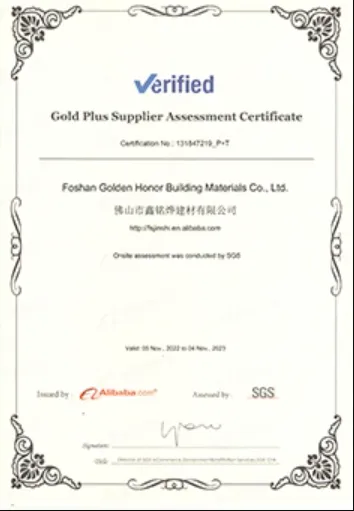
Certificate




Frequently Asked Questions
We're professional stainless stair nosing manufacturers and suppliers in China, specialized in providing high quality customized service. We warmly welcome you to wholesale high-grade stainless stair nosing made in China here from our factory.
Stair nosing for use with existing tiled stairs, Stainless Stair Nosing, commercial metal stair nosing