

Hey everyone, if you've ever been tile shopping or renovating a bathroom, you've probably stumbled over those little finishing touches that make or break a space-especially corner edges. As a supplier of PVC and marble tile trim, I get so many questions about this: Can PVC marble trim even be used for corner edges? Spoiler alert-yes, it can, but there's way more to it than just slapping a piece on a corner. Let me break this down like I would chat with a customer standing in front of my showroom, no boring jargon, just real talk.
First, let's clear up what PVC marble trim actually is, 'cause a lot of folks mix it up with regular marble trim. It's a type of tile edge trim made from polyvinyl chloride (PVC) that's designed to mimic the look of natural marble-think subtle veining, warm tones, that polished finish without the heavy price tag or brittleness of real stone. Now, corner edges are tricky 'cause they take a beating: they get bumped, chipped, exposed to moisture in kitchens or bathrooms, and if you mess up the trim, it can make your whole tile job look unfinished, even messy.


Wait, let's start with why corners matter. When you're tiling a corner, whether it's a wall meeting the floor or two walls meeting each other, tile edges aren't just straight-they're at a 90-degree angle. If you use raw tile ends here, they're super easy to chip. Natural marble tile corners are especially vulnerable 'cause stone is porous and prone to cracking. That's where trim comes in, right? But why PVC marble trim instead of, say, solid marble trim? Let's talk durability first. PVC is flexible enough to handle small impacts that would send a marble chip flying-we're talking daily knocks from cabinets, cleaning supplies, even kids playing nearby. It's also water-resistant, which is non-negotiable for corners in bathrooms, laundries, or outdoor spaces where moisture builds up.
I see a lot of people ask, "Will it look like marble enough?" That's the big one, right? PVC marble trim has come a long way from the cheap, plastic-looking stuff from 10 years ago. Modern formulations replicate the natural stone's texture and color so well, most folks can't tell the difference unless they run a finger over it. The veining is subtle, not too bold, so it works with all marble tile styles- Carrara, Calacatta, even the darker marbles like Emperador. For corners, that consistency is key 'cause you don't want one trim piece looking off in a sea of tile.
Now, how do you actually use it for corner edges? Let's get practical here. There are two main types you'll want to reach for. First, there's PVC tile corner trim-this is specifically shaped for 90-degree wall corners, with a pre-bent angle that fits right over the raw tile ends. No cutting required, mostly, which saves so much time. I always send customers to check out our PVC tile corner trim if they're tackling interior corners 'cause it's cut to size to match standard tile thicknesses (usually 10mm or 12mm, which is what most people use). Then, for exterior corners-like a countertop edge that meets a wall-you might use a marble PVC tile edge trim that's shaped to wrap over the edge, creating a seamless transition. Wait, some people try to cut regular marble trim for corners, but that's a nightmare. Marble is heavy, hard to cut accurately, and even a small mistake means you have to toss the whole piece. PVC corner trim for marble tile is pre-cut to fit, so no waste, no extra work.
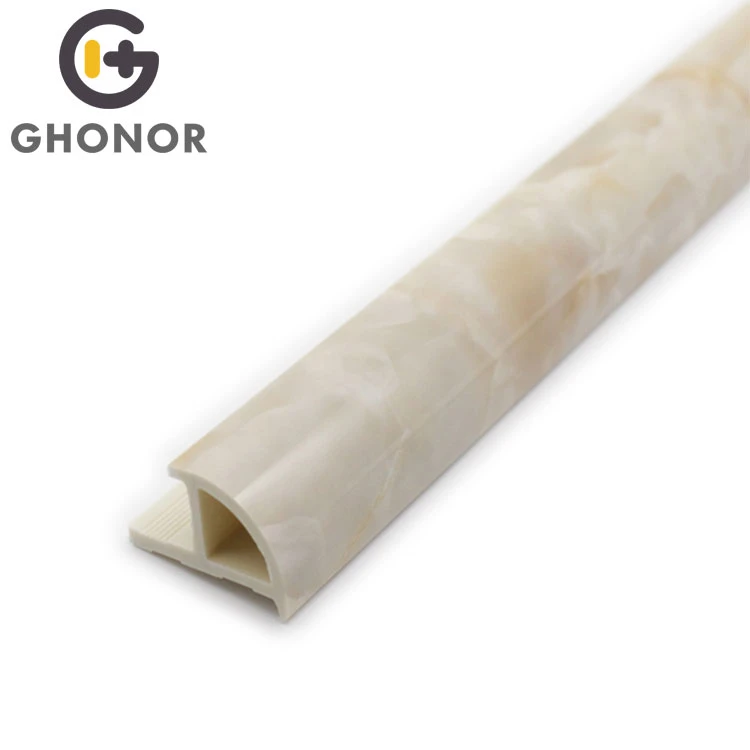
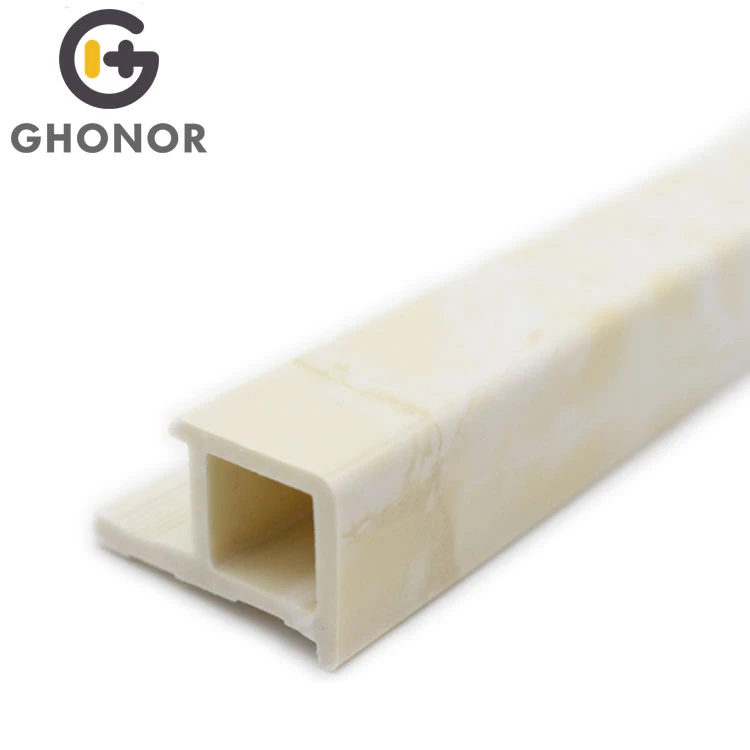
Let me address a common myth: "PVC will discolor or get moldy in wet areas." That's old news. Modern PVC tile trim is formulated with anti-mold and UV-resistant additives, so it works just as well in a steamy bathroom as it does in a sunny patio. I've had customers who installed our trim in their shower corners 5 years ago, and it still looks exactly like the day it went in-no yellowing, no mold stains, easy to wipe down. Compare that to some metal trim, which can rust if the coating wears off, or solid marble, which stains if you get soap scum or grout on it.
Wait, let's talk installation, 'cause that's where a lot of people go wrong. If you're using PVC marble trim for corners, you can't just stick it on with regular tile adhesive. You need a thin-set mortar that's flexible, 'cause PVC expands and contracts a little with temperature changes. If you use a rigid adhesive, it'll crack over time, especially if you bump the corner. Also, make sure you miter the tile edges just right before applying the trim-leave a tiny gap (like 1/16 inch) at the very top of the corner so the trim can sit flush. For external corners, you might need to cut the trim to length with a miter saw, but even that's way easier than cutting marble, 'cause PVC cuts smoothly with a regular handsaw or even a utility knife for small projects.
I get asked all the time, "Is it budget-friendly?" Let's be real-renovations add up fast. Solid marble corner trim can cost $15 to $30 per linear foot, but PVC marble trim is about a third of that. That's a huge difference if you're tiling a whole bathroom with multiple corners. And since it's easier to install, you might save on labor too-tilers charge less for applying pre-shaped trim than for cutting custom marble pieces. Don't get me wrong, solid marble is great for high-end projects, but PVC marble trim is the way to go for most people who want that marble look without the hassle.
Wait, but are there cases where it's not the best choice? Let's be honest, no product works for every job. If you're doing a super high-end commercial project where every detail has to be perfect, and you have a big budget, solid marble corner trim might be the way to go. But for residential projects, rental properties, DIY jobs, or even large commercial spaces where durability matters more than ultra-luxury, PVC is a no-brainer. Also, if you're installing tile on a curved corner? PVC is flexible enough to bend slightly for gentle curves, whereas marble would crack. That's a big win for unique spaces.
Let me share a quick customer story to make this real. Last year, a guy came in here panicking 'cause he was tiling his kitchen backsplash and accidentally chipped three marble tiles on the corner. He'd already bought solid marble corner trim, but it cost him $80 for one piece, and he still needed two more. We pointed him to our marble PVC tile edge trim-he got the three pieces for under $50, and it matched his Calacatta marble tile so well, his wife didn't even notice it wasn't real stone. A month later, he came back to buy more for his bathroom, said it held up when his kid bumped the corner with a toy truck. That's exactly the kind of win I love to see.
Now, let's make sure you're picking the right trim. If you're dealing with drywall corners before tiling-wait, right! A lot of people install corner bead first. That's where plastic drywall corner bead comes in-it creates a smooth, sturdy base for your trim to attach to. If you skip that step, your trim might not sit straight, and the corner could be wobbly. So make sure you start with a good drywall corner bead, then layer on the PVC marble trim for tile edges. Oh, and for different colors? We have black PVC tile edge trim too, if you're going for a bold contrast-like white subway tile with black marble trim. That's a huge trend right now, and it works way better than metal trim for that modern look.
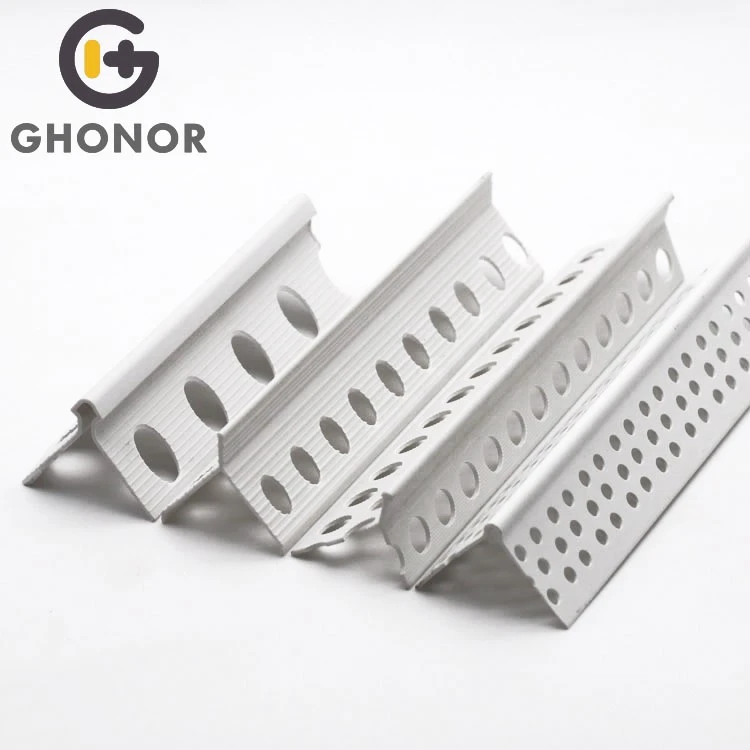
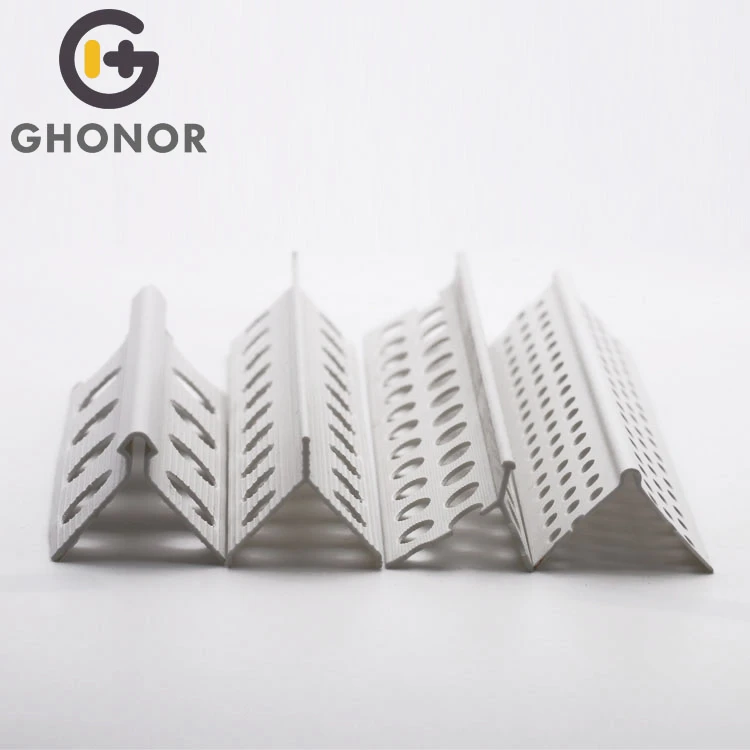
Wait, what about grout lines? A lot of people worry that PVC trim will leave a gap that's hard to grout. But if you install it correctly, the gap between the trim and the tile is tiny, so grout fills it in seamlessly. Just make sure you wipe excess grout off the trim right away-PVC is non-porous, so grout doesn't stick to it permanently, but if you let it dry, it's a pain to clean. For corners, I like to use a sanded grout, 'cause it's more durable than unsanded, and it fills the small gap between the tile and trim nicely.
Another thing: maintenance. PVC marble trim is so low-effort. You don't need to seal it like you do natural marble-no annual sealing, no special cleaners. Just wipe it down with a mild soap and water, same as your tile. That's perfect for people who don't have time for high-maintenance finishes, or for rental properties where you can't handle extra upkeep.
Let me wrap this up so it's clear: Yes, PVC marble trim absolutely can (and should) be used for corner edges. It's durable, budget-friendly, easy to install, looks amazing, and holds up way better than raw tile or even solid marble for most everyday use cases. The key is to pick the right type-PVC tile corner trim for interior 90-degree corners, marble PVC tile edge trim for external edges, and pair it with a solid drywall corner bead if you're prepping the drywall first.
Wait, if you're still not sure which trim works for your project, we have all the options right here: check out our PVC tile corner trim for interior corners, black PVC tile edge trim for bold looks, or plastic trim for tile edge for any general tile edge needs. If you're a DIYer or a contractor looking to restock, feel free to reach out-we work with everyone from homeowners doing a bathroom redo to big renovation teams on commercial projects. No matter the size, we've got the trim that fits your corner edges perfectly.
I know renovating can be overwhelming, especially with all the small details that go into making a space look finished. But trim shouldn't be a stressor. PVC marble trim takes the guesswork out of it, saves you money, and gives you that polished, marble look you want without the headache. Next time you're picking tile for a corner, skip the custom marble cuts and go with PVC-your wallet (and your future self) will thank you.
If you're ready to pick up trim for your project, don't hesitate to get in touch. We've got all the info you need to find the right corner trim for your tile, and we can help with sizing, installation tips, even samples if you want to see how the marble finish matches your tile in person. No pressure, just honest advice from someone who's been in this tile trim game for years.
References
- Tile Council of North America. (2022). Handbook for Ceramic Tile Installation. TCNA.
- American Architectural Manufacturers Association. (2021). Performance Standards for PVC Trim Products. AAMA.
- DIY Network. (2023). How to Install Tile Trim for Corner Edges. Scripps Networks Interactive.
- National Kitchen and Bath Association. (2022). Budget-Friendly Tile Finishes for Residential Renovations. NKBA.