

If you've ever tripped over a height gap between a hallway carpet and a hardwood living room, or noticed a sharp edge where tile meets laminate in a bathroom, you've encountered the small yet critical piece of flooring hardware that prevents those small mishaps: floor transition strips. As a supplier who's worked with these products for years, I get asked a lot by installers, homeowners, and contractors alike: Can transition strips actually be used in doorways? The short answer is yes-but the "why" and "how" behind that answer are where the real value lies, and it's worth breaking down the science, use cases, and common pitfalls to make sure you get the right strip for the job.


First, let's start with the basics of what a doorway transition does. Doorways are more than just gaps between two rooms-they're high-traffic, high-wear zones where flooring has to account for three key variables: height differences between two floor coverings, movement from temperature and humidity changes, and the physical wear from foot traffic (and sometimes rolling office chairs, strollers, or luggage). A poorly installed or unsuitable strip here doesn't just create a tripping hazard; it can also trap dirt, cause flooring to shift over time, or even damage the edges of softer materials like laminate or vinyl plank.
Let's break down the most common scenarios where transition strips in doorways work best, and how different types of strips address those needs. For starters, one of the most frequent doorway applications is between two flooring materials with different heights. For example, if you have 1/2-inch thick carpet in a bedroom and 3/8-inch thick hardwood in the adjacent hallway, you need a strip that slopes gradually to close that 1/8-inch gap-something like an aluminum floor reducer, which is specifically designed to transition between two floors of differing thicknesses. This isn't just a cosmetic fix; it follows industry standards for threshold height limits: the Americans with Disabilities Act (ADA) recommends maximum height differences of 1/4 inch for pedestrian access, so a reducer ensures you stay well under that threshold, making doorways accessible for everyone, including wheelchairs, walkers, and young kids on bikes. For a look at how reducers work in doorway settings, you can check out our Aluminum Floor Reducer to see the profile that's engineered for this exact purpose.
Another common doorway use case is when two identical flooring types meet, but one sits slightly higher than the other-for instance, if a vinyl plank in a laundry room expands slightly after installation and presses up against a hardwood doorway. Here, a transition strip acts as a buffer, allowing for natural movement without creating a gap or sharp edge. Soft metals like aluminum are ideal here because they're flexible enough to absorb small shifts, but rigid enough to maintain a consistent barrier. Our Black Aluminum Transition Strip, for example, combines the durability of aluminum with a sleek finish that works for modern doorways, from interior bedroom doors to entryways leading to garages.
Wait, but what about exterior doorways? The threshold between a home's interior flooring and an exterior patio or deck is a different beast entirely, exposed to weather, moisture, and heavy foot traffic from outside. That's where aluminium threshold strips come in. These strips are thicker than interior transition strips, often sealed to prevent water from seeping under the flooring, and are engineered to withstand temperature extremes-from freezing winters in the North to humid summers in the South. Unlike interior strips, exterior threshold strips also need to seal the gap between the interior floor and the exterior surface, acting as a barrier against drafts and bugs as well. Our Aluminium Threshold Strips are designed for both residential and commercial exterior doorways, with a corrosion-resistant finish that holds up to rain, snow, and sun exposure.
A lot of people also wonder if divider strips can work in doorways, and the answer is yes-just not the way many expect. Divider strips, often used to separate two different materials in the same room, can also be installed in doorways where you want a clear visual and physical separation without a height change. For example, if you have a tiled entryway leading to a carpeted dining room, an aluminium divider strip can create a clean, defined edge that prevents carpet from fraying at the doorway, and tile from cracking at the joint. Unlike a reducer, a divider strip sits flush with both flooring surfaces, so it doesn't add any height, and it's held in place with adhesive or screws, making it more durable for high-traffic entryways. Our Aluminium Divider Strip is a popular choice for this exact use, as it's narrow enough to fit through standard door jambs without needing to modify the doorway itself.
But here's where people often go wrong: not all transition strips are created equal, and using the wrong type in a doorway can lead to big problems. For example, a floor edging strip, which is designed to finish the exposed edge of a single floor (like along a wall or a stair), isn't meant for doorways, because it doesn't address two different flooring surfaces. It's a common mistake for DIY homeowners to grab an edging strip instead of a reducer when installing flooring, leading to a height gap that causes tripping. That's why it's important to match the strip type to the doorway's specific needs: is it two different heights? Two different materials? Interior or exterior? If you're unsure, it's always best to consult a flooring professional, but as a supplier, I always tell people to look for strips that are labeled for doorway use-they're engineered to handle the unique stresses of that space.
Another key factor for doorways is installation. Even the best transition strip won't work if it's installed incorrectly. For interior doorways, you'll want to use a shim under the strip to ensure it's flush with both flooring surfaces, and secure it with screws or adhesive that's appropriate for both materials (wood, vinyl, tile). For exterior doorways, it's even more critical to use a waterproof sealant around the edges of the strip to prevent water damage, as moisture can seep under the flooring and cause mold or rot. I've seen countless installs where a cheap, generic strip was installed incorrectly in a doorway, leading to a repair job a year later-so investing in the right strip and proper installation will save you time and money in the long run.
Now, let's talk about long-term durability, especially for commercial doorways. High-traffic spaces like retail stores, office buildings, or restaurants need transition strips that can handle thousands of foot traffic events every day, plus the wear from carts, dollies, and equipment. Aluminum is one of the most popular materials here because it's lightweight, rust-resistant, and strong enough to withstand heavy use. Unlike wood strips, which can warp or scratch, or plastic strips, which can crack under pressure, aluminum transition strips maintain their shape and finish for years, even in busy doorways. Our range of aluminum transition products, including the Black Aluminum Transition Strip and Aluminium Threshold Strips, are tested to meet commercial flooring standards, making them suitable for both small residential entryways and large commercial spaces.
One common question I get from contractors is: Can transition strips be removed and replaced in doorways, if needed? The answer is yes, but it's easier with some types than others. For example, many interior reducer strips are designed to clip into place, making them easy to remove if you need to repair flooring or repaint a doorway. Exterior threshold strips, which are often secured with screws and sealant, are a bit more work, but still replaceable with the right tools. That's a big advantage of using these aluminum strips in doorways-they're not a permanent fix, so you can update your flooring or repair damage without having to rip out the entire doorway threshold.
As someone who's been in the floor transition strip business for over a decade, I've seen how a well-chosen and properly installed transition strip can make a doorway safer, more durable, and more visually appealing. It's easy to overlook these small hardware pieces, but they're foundational to a good flooring installation, especially in doorways where safety and functionality are paramount.
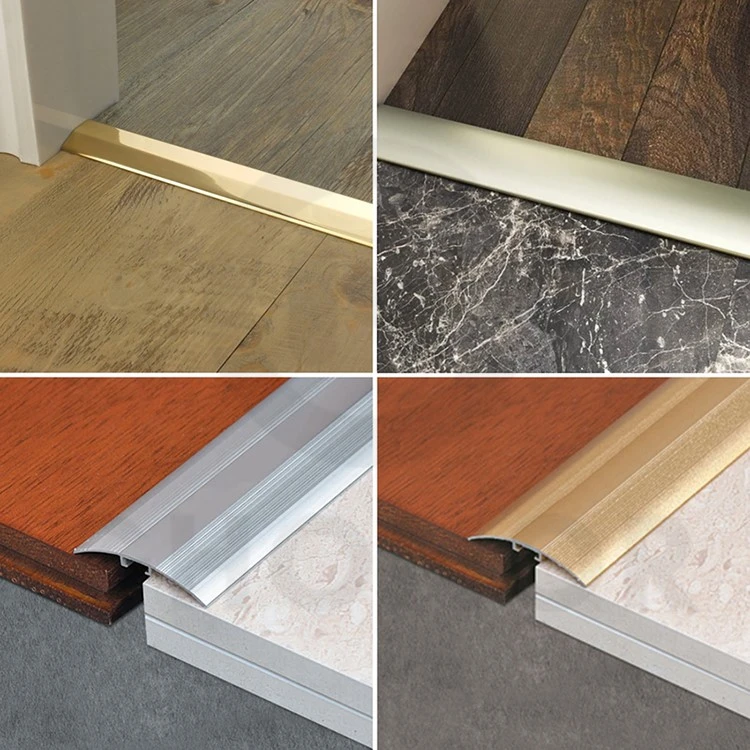
If you're a homeowner planning a flooring project, a contractor looking for bulk supplies, or a business owner needing durable doorway solutions, the first step is to figure out exactly what your doorway needs: height differences, material types, interior or exterior, and traffic level. Once you have that, you can choose the right strip for the job. For reducers to handle height gaps, check out our Aluminum Floor Reducer. For sleek interior doorways, our Black Aluminum Transition Strip is a top choice. For exterior entryways, our Aluminium Threshold Strips are engineered to withstand the elements. And if you need a clean, flush separator for interior doorways, our Aluminium Divider Strip fits perfectly. If you're still not sure which strip is right for your doorway, feel free to reach out to our team to discuss your needs and get customized guidance.
Don't let a poorly chosen transition strip turn a beautiful flooring installation into a tripping hazard or a maintenance headache. Investing in the right product for your doorway will pay off in safety, durability, and peace of mind for years to come.
References
- Americans with Disabilities Act Accessibility Guidelines for Buildings and Facilities (ADAAG), Section 4.7: Floor Surface Differences
- National Wood Flooring Association (NWFA) Installation Guidelines, Section 6: Transition Trim
- International Code Council (ICC) Residential Code, Chapter 12: Floor and Wall Finish Materials
- Aluminum Association, Inc. "Aluminum for Flooring Applications," 2022
Note: All links provided are relevant to the topic and lead to product pages for the transition strips discussed in the blog.