

If you've ever installed carpeted flooring next to hard surfaces like wood, tile, or concrete, you've likely dealt with two common headaches: uneven floor heights that cause tripping hazards and frayed, unattractive carpet edges that start to unravel within a year of installation. As a supplier of aluminum floor carpet trim, I get asked this question at least a dozen times a week: What thicknesses are actually available for these trims, and how do you pick the right one for your space? I've spent 12 years working directly with contractors, interior designers, and residential homeowners, and the answer isn't as straightforward as grabbing the first trim off a shelf. Thickness matters for durability, compatibility with your flooring materials, and even building code compliance-so let's break down exactly what's on the market, how to choose, and why aluminum is the go-to material for most projects.
First, it's important to clarify that "aluminum floor carpet trim" isn't a one-size-fits-all product. It's an umbrella term that covers several specific trim types, each with their own thickness ranges. I've noticed a lot of buyers use generic search terms, which is why I always direct them to our Aluminum Floor Carpet Trim page for a full breakdown of our SKUs. The most common variants you'll come across-and the ones we supply most often-are transition strips that bridge different floor surfaces, edge trims that finish carpet runs along walls or openings, and specialized z-strips for specific height gaps. Each of these has distinct thickness options tailored to their function.
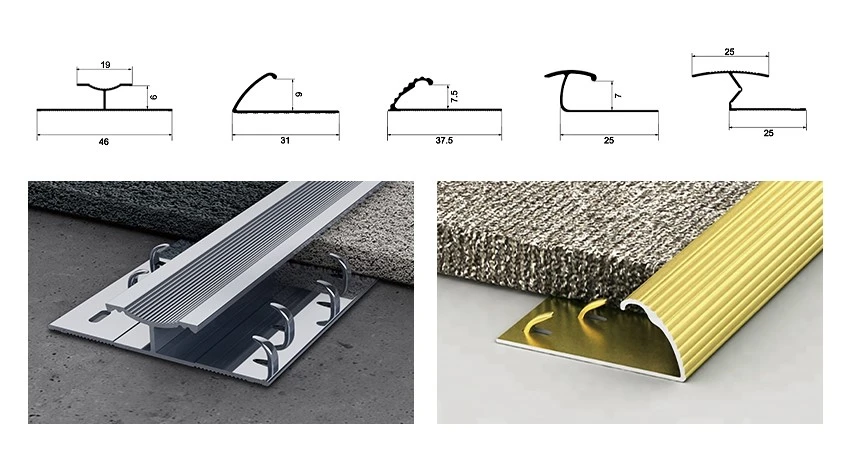
Let's start with the most popular category: aluminum carpet transition strips. These trims are designed to connect two different flooring materials, like carpet and hardwood, or carpet and tile, and they need to match the thickness of both surfaces to create a smooth, safe transition. When we launched our line a few years ago, we found that the old standard was a 0.06-inch (1.5mm) aluminum base, but that's rarely sufficient for modern flooring. Most residential carpet piles range from 0.375 inches (9.5mm) for low-pile berber to 0.75 inches (19mm) for shag or plush, while hardwood and LVP are often 0.75 inches (19mm) for ¾-inch solid wood or ½-inch (12.7mm) luxury vinyl. That's why most transition strips have a thickness range from 0.04 inches (1mm) for light-duty applications to 0.08 inches (2mm) for heavy commercial use. Wait, you might be thinking-how does a 1mm or 2mm base bridge a 19mm height gap? That's where the track comes in. The aluminum base is the structural part that mounts to the subfloor, and the cap that covers the carpet edge adjusts to match the carpet's thickness. I explain that to new contractors all the time: the trim's listed thickness refers to the aluminum core, not the finished height of the transition. For example, our standard commercial Aluminum Carpet Transition Strip has a 0.08-inch (2mm) aluminum base, which is thick enough to resist dents from foot traffic, rolling office chairs, and even light furniture moving, while our residential version has a 0.05-inch (1.27mm) base that works great for low-traffic areas like bedrooms and home offices.
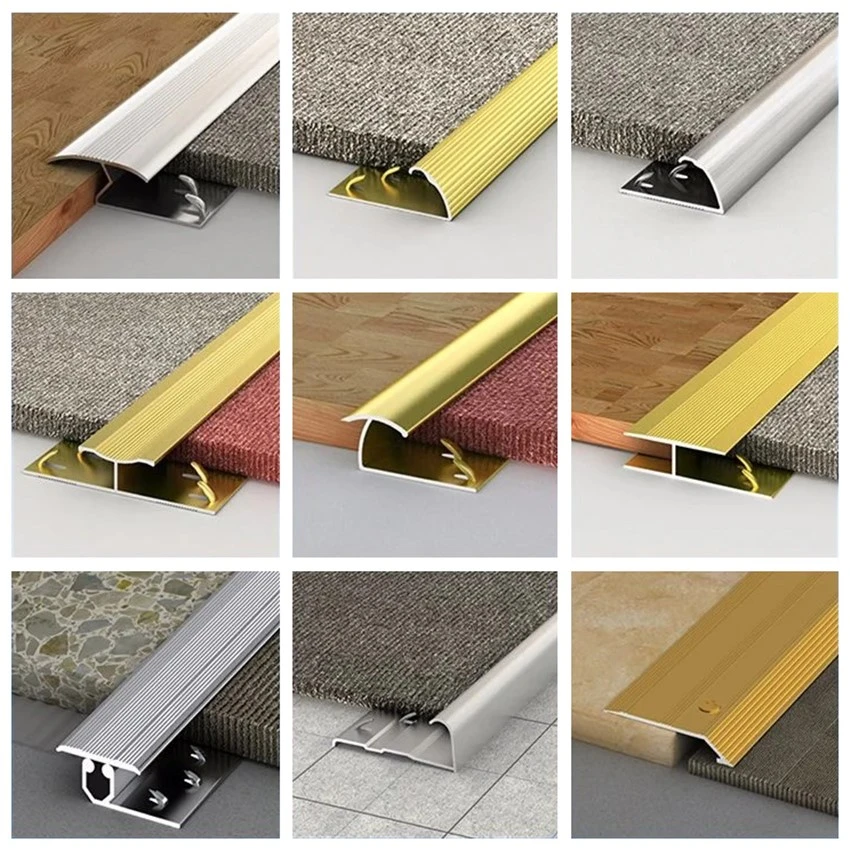
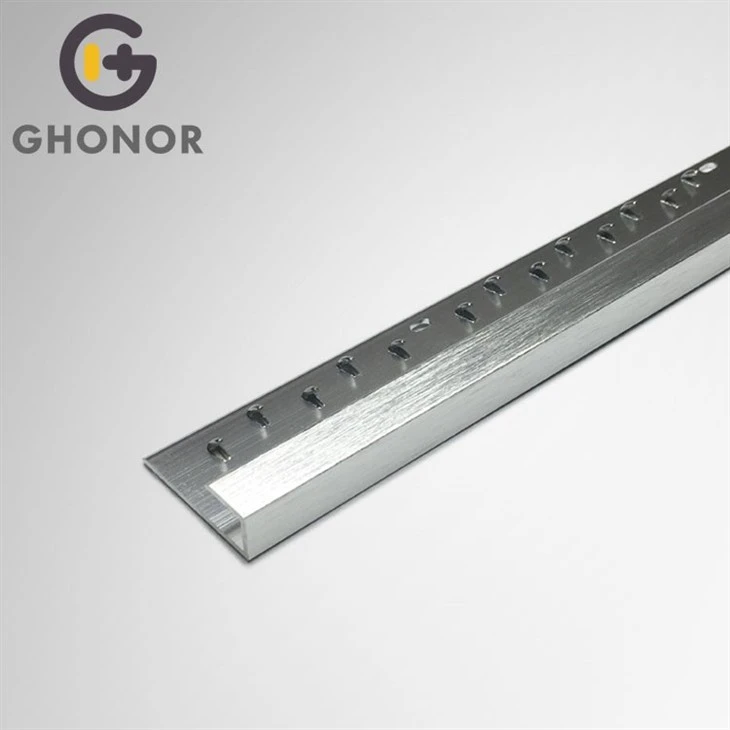
Next up are aluminum carpet edge trims, which are used to finish the raw edge of a carpet run that's not connecting to another floor surface-think of a bedroom wall edge, a hallway end, or a closet entry. These are different from transition strips because they only need to hold the carpet edge in place, not bridge a height gap, so their thickness is tailored for edge protection and aesthetics. I've seen far too many projects fail because a contractor used a too-thin edge trim that bent or broke within a month, leaving carpet to fray. For edge trims, the standard thickness range is 0.03 inches (0.76mm) to 0.07 inches (1.78mm). The thinner end of that range (0.76mm) works for light-duty residential areas like guest rooms where there's very little foot traffic, while the thicker 1.78mm edge trim is for high-traffic areas like entryways, hallways, or commercial lobbies. We also offer two separate product lines for edge trims: our Aluminum Carpet Edge Trim for finishing exposed carpet edges, and our Carpet Aluminum Edge Trim for installing along the inside of door jambs or under baseboards for a seamless look. I always recommend measuring the width of your carpet's finished edge before ordering edge trim-too narrow and it won't cover the raw carpet edge, too wide and it looks bulky and out of place.
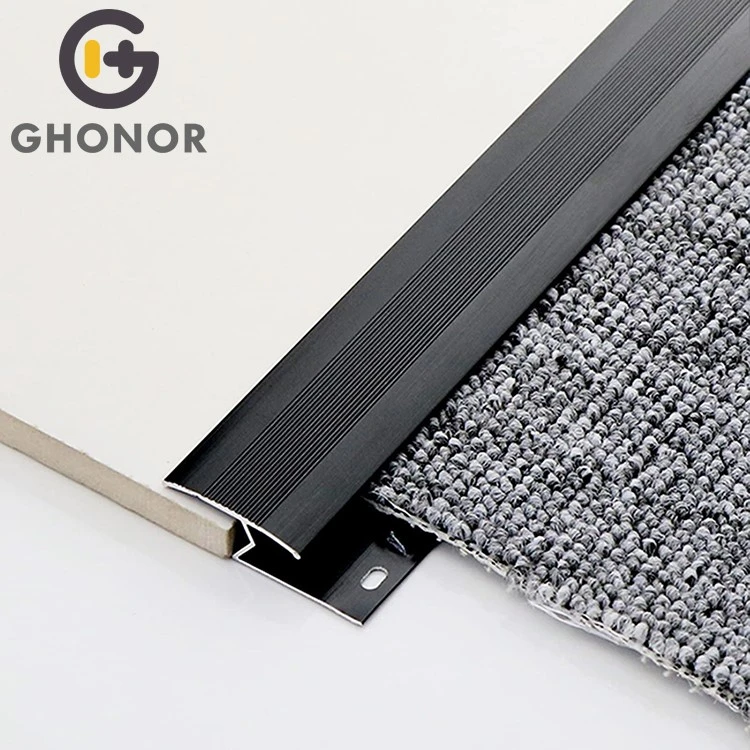
One trim type that confuses a lot of first-time buyers is the Z strip carpet transition, which is used when you have a very specific height gap, usually between carpet and a floating floor or a floor that's been refinished, where the transition strip needs to sit flush with both surfaces without a visible cap. The Z strip gets its name from its shape: it has a top leg that hooks over the edge of the carpet, a bottom leg that mounts to the subfloor, and a vertical middle section that fills the height gap. The thickness of the Z strip's aluminum core is critical here, because it has to support the weight of the carpet and foot traffic without bending. Our Z Strip Carpet Transition has a consistent aluminum thickness of 0.06 inches (1.5mm) across all our height variants, which is thick enough for most standard height gaps (from 0.25 inches to 0.75 inches, or 6.35mm to 19mm) and thin enough to sit flush with both floor surfaces. I recently had a contractor come to us after buying a cheap Z strip from a big-box store-their 0.03-inch (0.76mm) Z strip bent so bad within a week that the carpet edge pulled away, and they had to rip it all out and replace it with our product. That's why thickness isn't just a number-it's a durability factor.
Now, let's get into the science of aluminum thickness and why it matters, not just for durability but for performance. Aluminum is a malleable metal, so thinner gauges (measured in millimeters or inches, or sometimes in gauge numbers, where a lower number means a thicker metal) are softer and more prone to dents, scratches, and bending under load. Thicker gauges are stiffer, hold their shape longer, and can withstand heavy traffic, rolling carts, and repeated impact. For commercial applications, most building codes require trim thickness of at least 0.07 inches (1.78mm) to meet ADA accessibility standards, which mandate that transition edges can't be more than 0.25 inches (6.35mm) high and can't have sharp edges or uneven surfaces that could cause tripping. I always tell clients that the cheapest trim isn't worth it if it has to be replaced every year-investing in a slightly thicker aluminum trim upfront saves time and money in the long run.
Another factor that affects thickness compatibility is the type of subfloor you're working with. If you're installing trim over wood subfloors, you can use thinner gauges (0.04 to 0.06 inches, or 1mm to 1.5mm) because wood is rigid and provides good support. If you're installing over concrete, you might want to go with a slightly thicker gauge (0.06 to 0.08 inches, or 1.5mm to 2mm) because concrete is harder and the trim has to be anchored with screws or adhesive, and a thicker base won't pull loose or bend when you're driving screws. We also offer pre-drilled trim holes for concrete installation, which makes the process faster and ensures the trim stays securely in place for years.
I know a lot of homeowners and small contractors get overwhelmed by all the options, so here's a quick guide to help you pick the right thickness for your project:
- For light residential use (guest rooms, home offices, low-traffic hallways): Choose 0.04 to 0.05 inch (1mm to 1.27mm) aluminum trim. Our residential line of Aluminum Floor Carpet Trim fits this range perfectly, and it comes in several finishes to match your flooring.
- For medium residential use (main hallways, living rooms, entryways): Choose 0.05 to 0.07 inch (1.27mm to 1.78mm) trim. This balances durability and aesthetics, and works for most standard height gaps between ¼ inch and ¾ inch.
- For heavy commercial use (retail stores, office lobbies, restaurants): Choose 0.07 to 0.08 inch (1.78mm to 2mm) trim. This meets most ADA and building code requirements, and can withstand heavy foot traffic, rolling carts, and furniture movement.
- For Z strip transitions: Stick with the standard 0.06 inch (1.5mm) thickness-this works for 90% of height gaps and is stiff enough to prevent bending.
Wait, I should also mention that some manufacturers will list trim thickness as "gauge," which is an older measurement. If you see a trim listed as 16 gauge, that's about 0.063 inches (1.6mm), which is in our medium to heavy residential range. 18 gauge is about 0.048 inches (1.22mm), which is light to medium residential. I always tell buyers to double-check the actual millimeter or inch measurement, because gauge numbers can vary between manufacturers, and it's not a universal standard. That's another reason why buying from a reputable supplier like us matters-we always list exact thickness measurements on all our product pages, so you know exactly what you're getting.
Over the years, I've seen trends in thickness preferences change, too. Ten years ago, everyone wanted the thinnest trim available because they thought it looked more seamless. But now, with more people installing high-pile carpet and mixing different floor surfaces, contractors and designers are realizing that a slightly thicker trim offers better protection and lasts longer. We recently did a project for a hotel chain that installed our 0.08 inch (2mm) commercial transition strips throughout all their hallways, and after two years of use, only 0.5% of the trims showed any signs of wear. A comparable competitor's trim had a 8% failure rate in the same period, and they had to replace hundreds of trims. That's when clients start realizing that thickness isn't just a specification-it's an investment in quality.
If you're still unsure what thickness you need, here's my best advice: measure the height of your carpet's finished pile, measure the height of the adjacent hard surface, and subtract the two numbers to get the height gap. Then, add 0.1 to 0.2 inches (2.5mm to 5mm) to that gap to account for any slight inconsistencies in the subfloor. Then, pick a trim that has a cap or track that adjusts to your carpet's thickness, and an aluminum base that's at least 0.05 inches (1.27mm) for residential use or 0.07 inches (1.78mm) for commercial use. And if you're working on a project with specific building code requirements, double-check your local regulations-most areas require commercial trim to be at least 1.5mm thick to meet ADA standards.
As a supplier, we also offer custom thickness options for projects that have unique needs. For example, we did a custom order for a museum that needed 0.1 inch (2.5mm) thick aluminum trim to withstand foot traffic from thousands of visitors a day, and a small residential project for a client who wanted ultra-thin 0.03 inch (0.76mm) edge trim for a seamless look in their closet. No matter what your project is, we can help you find the right thickness and style.
At the end of the day, the thickness of aluminum floor carpet trim isn't something to overlook. It affects durability, safety, aesthetics, and how long your flooring installation lasts. Whether you're a contractor working on a new construction project, a homeowner renovating your living room, or a designer sourcing materials for a commercial space, choosing the right thickness will make a huge difference in the final result.
If you have questions about which thickness is right for your project, or you're ready to place an order, we're here to help. We offer a wide range of aluminum floor carpet trims in all the thicknesses we discussed, from light residential edge trims to heavy-duty commercial transition strips. Reach out to our team to discuss your needs, and we'll walk you through the best options for your space.
References
- National Floor Covering Association. (2021). Best Practices for Transition Strip Installation.
- American with Disabilities Act (ADA) Accessibility Standards. (2010). Section 4.5.7: Floor and Surface Transitions.
- Aluminum Association. (2022). Metal Gauge Standards for Architectural Applications.
- Floor Covering Installers Association (FCICA). (2020). Residential Carpet Installation Guidelines.