


How to Import Aluminum Tile Trim from Vietnam: A Real-World Practical Guide
If you've been in the building materials industry for a while, you've probably noticed how much global supply chains have shifted recently. Importers, wholesalers, and distributors everywhere are looking for ways to cut costs, bypass heavy trade barriers, and diversify away from single-country sourcing.
Over the past few years, Vietnam has turned into one of the go-to spots for aluminum extrusion and finishing. If you are planning to source aluminum tile trims, transition profiles, or stair nosings, Vietnam offers some serious advantages in tariffs, labor, and logistics.
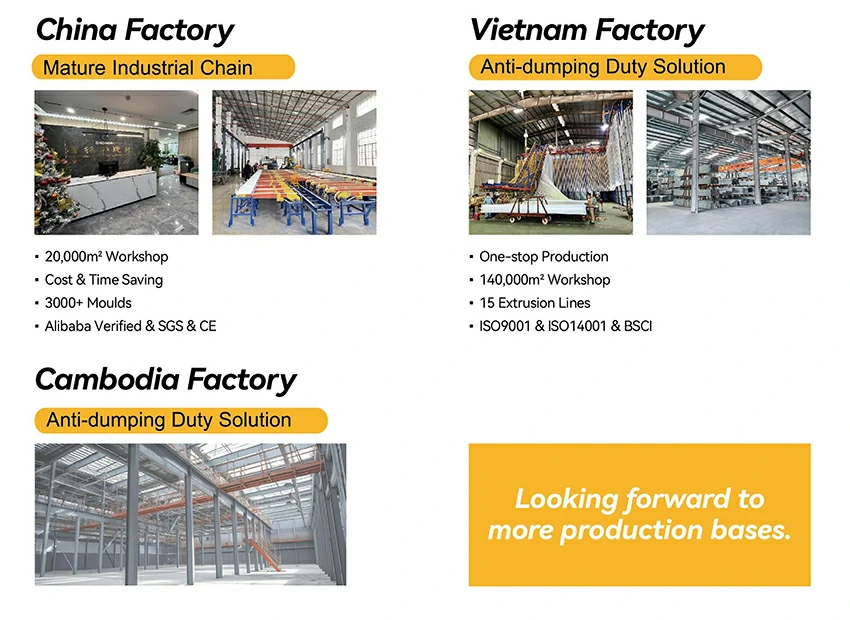
Having spent 19 years in the aluminum manufacturing business-operating production bases across China, Vietnam, and Cambodia-I've walked countless buyers through this exact process. Here is a straightforward, no-nonsense guide on how to import aluminum tile trims from Vietnam without getting headaches along the way.
1. Why Look at Vietnam for Aluminum Tile Trims?
Let's be honest: buyers don't shift supply chains for fun. They do it because the numbers and risks make sense. Here is why sourcing tile trims from Vietnam is catching on:
- Tariff and Trade Relief: One of the biggest drivers is dodging the heavy anti-dumping duties and high tariffs that hit traditional manufacturing hubs. Sourcing from Vietnam, paired with proper origin documentation, can make a massive difference to your bottom line.
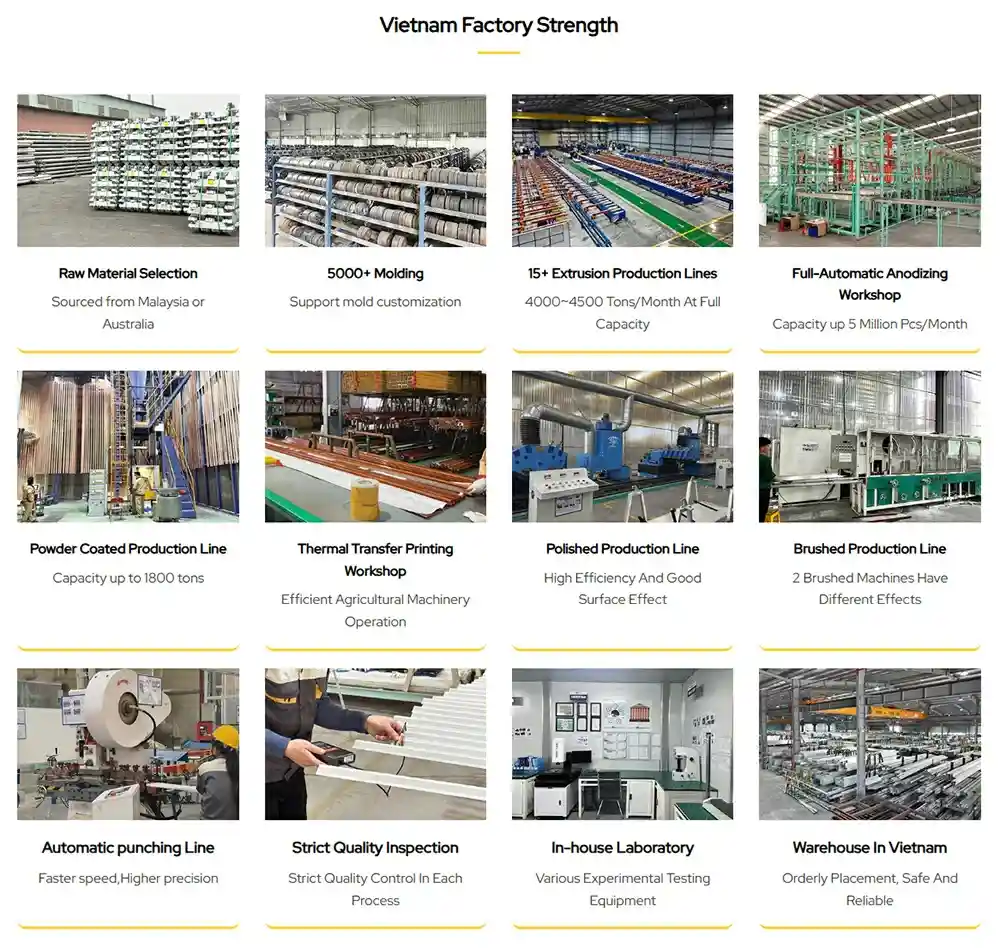
- Growing Industrial Maturity: Industrial zones in places like Cam Giang District, Hai Duong Province, are now packed with modern extrusion lines, automated anodizing plants, and powder coating setups. The technical capability is genuinely there.
- Supply Chain Backup: Relying on just one factory or one country is risky business nowadays. Working with a supplier that has dual production bases gives you a built-in safety net.
2. The Real Hidden Risk: Communication and How We Solve It
Ask any importer who has tried buying building materials out of Southeast Asia what their biggest nightmare is, and nine times out of ten, they will say communication breakdown.
You deal with local management, things get lost in translation, technical drawings for custom tile trims get misunderstood, and updates drag on for days due to time zones and cultural gaps. By the time you realize something is wrong, production is already finished.
This is exactly where most buyers get burned-and it's why we did things differently at Ghonor.
When we set up our Vietnam facility, we didn't just hand it over to local management and hope for the best. Our entire Vietnam production base is directly overseen and managed by our experienced senior leadership and professional sales engineering team from China.
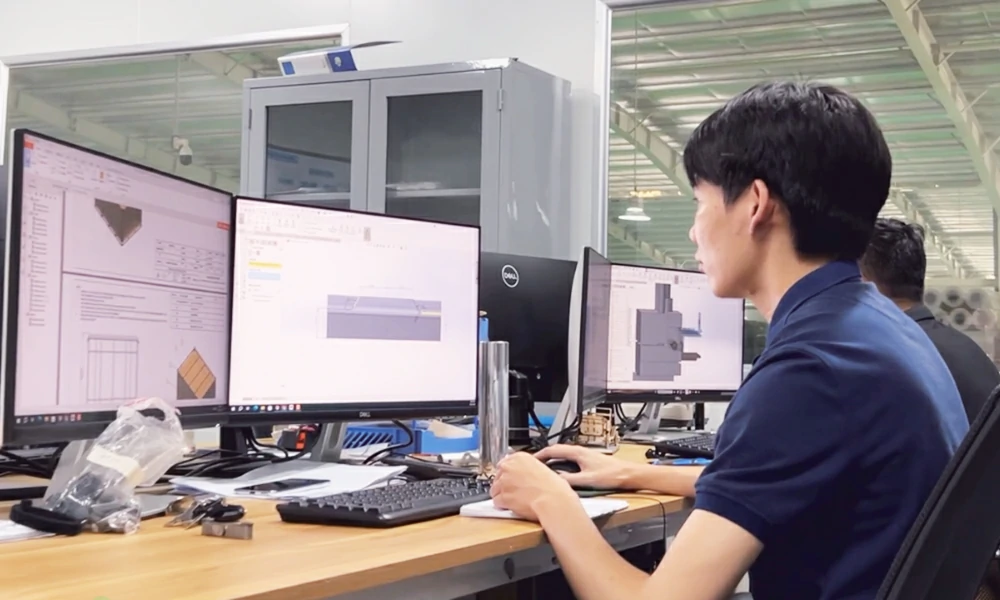
Because our core team has nearly two decades of hands-on experience in aluminum manufacturing, we speak your language. When you send over a custom CAD drawing for an aluminum transition profile or a specific stair nosing, our engineers get it instantly. You get Chinese manufacturing discipline, strict QC standards, and lightning-fast communication, combined with the cost advantages of Vietnam. No game of telephone, no delays.
3. Step-by-Step: How to Import Aluminum Tile Trims from Vietnam
Step 1: Filter Out the Trading Companies
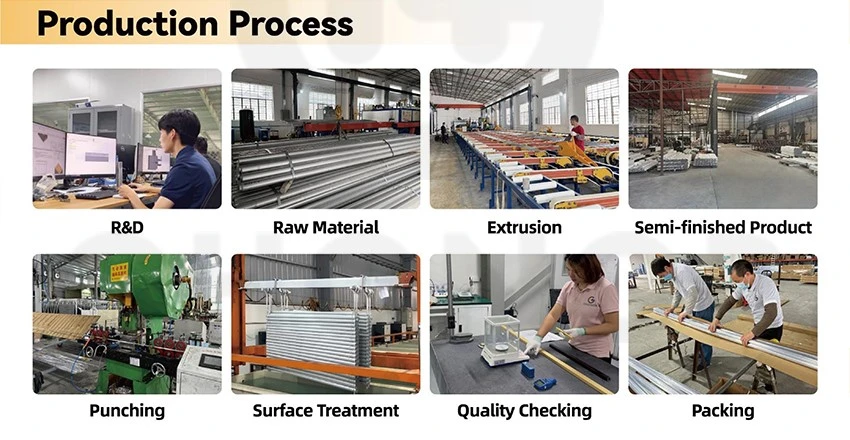
There are plenty of middlemen online pretending to be factories. Before sending any money, verify whether they actually own extrusion presses and surface treatment lines. Ask for video walkthroughs, check their export history, and see if they can handle custom specs.
Step 2: Lock Down Your Technical Specs
Tile trims are precision products. A fraction of a millimeter off can ruin an entire tiling job. Make sure you clearly specify:
- Alloy Grade: Usually architectural-grade 6063-T5.
- Surface Finish: Matte silver anodized, brushed champagne, polished gold, or custom powder coating.
- Dimensions & Tolerances: Lengths (usually 2.5m or 2.7m), wall thickness, and punch-hole patterns.
- Always Get Samples First: Never skip the sample stage. Check the anodizing thickness, straightness, and edge smoothness yourself before placing a bulk order.
Step 3: Sort Out Incoterms and Payment
Most shipments from northern Vietnamese ports (like Haiphong) run on FOB terms, though some buyers prefer CIF if they want the factory to handle freight booking. For payment, standard industry practice is a 30% deposit upfront, with the remaining 70% balance paid against the copy of the Bill of Lading or after a third-party inspection.
Step 4: Keep an Eye on Production & Packaging
Aluminum trims scratch and bend easily if handled poorly. Make sure your supplier packs them right: pearl cotton wrapping, protective shrink film, sturdy corrugated cartons, and fumigated wooden pallets to withstand ocean transit.
Step 5: Get Your Paperwork Ready for Customes
To clear customs smoothly and claim your tariff benefits, make sure your supplier hands over a clean set of documents: Commercial Invoice, Packing List, Bill of Lading, and a valid Certificate of Origin (C/O).
4. Frequently Asked Questions
Q: Will I actually save on tariffs by importing tile trims from Vietnam?
Yes. Properly documented shipments originating from Vietnam allow many overseas buyers to bypass high anti-dumping duties and qualify for favorable tariff brackets.
Q: Can Ghonor handle custom-designed profiles and custom packaging?
Definitely. With our engineering team overseeing operations, we handle OEM and ODM projects daily. We can extrude custom profiles based on your drawings and print your brand logo on the packaging.
Q: What is the usual lead time from the Vietnam factory?
Standard production usually takes around 20 to 30 days, depending on how complex the surface finishing is and how large the order volume is.
5. Let's Talk About Your Next Project
Importing from Vietnam doesn't have to be a gamble. When you work with a team that combines local production power with seasoned, professional Chinese management, you get the best of both worlds.
Drop us a line at Ghonor today. Let's talk about your project, send you some free samples, and show you how easy sourcing tile trims can actually be.
Share this post

Leah Liu
Hello there! I am Leah. I have worked in the building materials industry for over 10 years. I want to share my experience here - let us make progress together!