

If you've ever spent time finishing or renovating a basement, you know small details make the biggest difference-especially when it comes to transition pieces between flooring types. A question I get all the time from homeowners, contractors, and even fellow suppliers is: Can Aluminum Floor Carpet Trim be used for basement floors? As someone who's been in the metal transition strip game for years, I'm here to break this down honestly, with real-world context, and explain why these versatile strips are actually a solid pick for basements. Let's start with the basics.
First, let's talk about what basements throw at you. They're damp, way more prone to moisture, temperature swings, and foot traffic than upstairs living spaces. Traditional wood or plastic trim can warp, peel, or even grow mold when exposed to consistent moisture, which is a nightmare you definitely don't want to deal with a year after finishing your basement. That's where aluminum comes in-no nonsense, durable, and built to handle messy basement conditions.
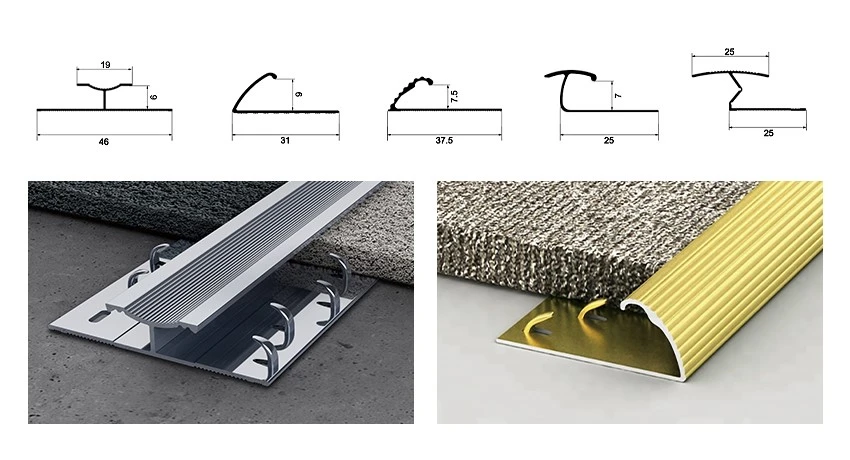
Wait, let's clarify: when I say aluminum floor carpet trim, I'm talking about the metal transition strips that bridge two flooring surfaces (like carpet and vinyl plank, carpet and tile, or even carpet and finished concrete). There are a few different names for these, too-Aluminium Carpet Threshold Strip, Carpet Aluminum Edge Trim, Aluminium Carpet Edge Strip, Aluminum Carpet Edge Trim-all doing slightly different jobs, but all built from the same reliable aluminum material. If you're not sure which one you need, our site has breakdowns for each, like the Aluminum Floor Carpet Trim product page that goes over specs, installation tips, and common use cases.

Now, why does aluminum work so well in basements? Let's get into the science without making your eyes glaze over. Aluminum is naturally corrosion-resistant. Unlike steel, which rusts when wet, aluminum forms a thin, invisible oxide layer when exposed to oxygen. That layer seals the metal from moisture, so it doesn't stain your carpet, warp, or break down over time. In basements, where humidity levels can jump (think winter humidity or a sudden leak you missed), that's a huge win. Plastic trim, on the other hand, can become brittle in cold basement air or start to peel when moisture gets under it. Wood trim needs to be sealed every year just to stay intact in damp spaces-aluminum skips that whole maintenance hassle.
Moisture is the big basement villain, so let's talk about installation details that matter. When you're laying trim in a basement, you have to make sure the subfloor is properly prepped. Concrete basements often have minor moisture seepage, so you should use a vapor barrier under your new flooring first. Then, when you install aluminum floor carpet trim, you want to attach it to the subfloor (not just the flooring itself) with stainless steel screws-regular steel screws can rust and stain the trim if they're exposed to moisture. Another pro tip: leave a tiny gap between the trim and the flooring to let any trapped moisture evaporate (aluminum's permeability helps here too, so it doesn't hold moisture against the floor).
What about the different types of aluminum trim, and when to use which in a basement? Let's break it down. If you're transitioning between carpet and tile (super common in basement wet bars), an Aluminium Carpet Threshold Strip works perfectly-it's designed to cover the gap between the two hard surfaces and keep carpet edges from fraying. For finishing the raw edge of carpet along a concrete wall, a Carpet Aluminum Edge Trim is ideal; it has a gentle lip that holds the carpet in place and prevents trips. If you're working with smaller gaps between two flooring pieces, an Aluminium Carpet Edge Strip or Aluminum Carpet Edge Trim is slim enough to fit without looking clunky, and still holds up to moisture. I've seen contractors use these in basements where space is tight, and they don't buckle or show wear even after 5+ years of high traffic.
Wait, but what about common concerns people have about aluminum in basements? Let's address the two big ones: temperature and noise. Basements are usually cooler than upstairs, especially in winter. Some folks worry aluminum will feel too cold under bare feet or make noise when you walk on it. The good news is, with a little padding under the carpet (like a thick rubber or foam underlay), the cold metal won't bother you. And the noise? Aluminum is dense, but when it's properly secured to the subfloor, it doesn't rattle or clink when you step on it. I've had customers tell me their kids run back and forth on basement floors with aluminum trim, and they barely hear a peep-way less than they would with a thin plastic transition strip.
Another big plus: aluminum trim is mold and mildew-resistant, which is non-negotiable in basements. Mold loves damp, dark spaces, and if your trim is made of a porous material like cheap plastic or unsealed wood, it's a breeding ground. Aluminum doesn't provide food for mold, so even if there's a little moisture around the trim, it won't grow. That means less cleaning, less maintenance, and a healthier basement overall.
Now, let's get into a real example to make this concrete (pun intended). Last year, a contractor reached out to me for a basement renovation in Ohio-they were finishing a 1,200 sq ft space with carpet in the living area, tile in the wet bar, and vinyl plank in the storage nook. They initially tried using wood trim, but after a month, it warped where a small pipe had leaked behind the wall. They switched to our Aluminum Floor Carpet Trim and associated edge strips, and a year later, they messaged me saying no issues at all. The trim still looks brand new, even with the Ohio humidity swings. That's the kind of real-world test that makes aluminum a no-brainer for basements.
So, to answer the original question: Yes, aluminum floor carpet trim is absolutely usable for basement floors, and it's actually one of the best options out there for durability, low maintenance, and resistance to moisture. The key is picking the right type for your specific space-whether that's an Aluminium Carpet Threshold Strip for flooring transitions, a Carpet Aluminum Edge Trim for wall edges, or a slimmer Aluminium Carpet Edge Strip for tight gaps.
If you're planning a basement finish or upgrade, don't just go with the cheapest trim at the home improvement store. Invest in something that will hold up for years, even when your basement gets a little damp or has lots of foot traffic. Our range of metal transition strips is designed exactly for these kinds of spaces, with all the durability of aluminum and easy installation for DIYers and contractors alike. We're always here to help you pick the right trim for your project-just reach out to our team to chat through your needs, no pressure, no sales hype.
Reference List:
- International Residential Code (IRC) – 2021 Edition. Chapter 3: Floor Construction, Section 305.4 (Moisture Control for Basement Floors).
- Aluminum Association. (2022). Corrosion Resistance of Aluminum Alloys for Building Applications.
- Basement Health Association. (2023). Moisture and Mold Prevention in Finished Basements.
- National Association of Home Builders (NAHB). (2022). Residential Transition Strips: Material Selection and Installation Best Practices.
- The Spruce. (2023). How to Choose Transition Strips for Flooring.